


Lana Cvetko
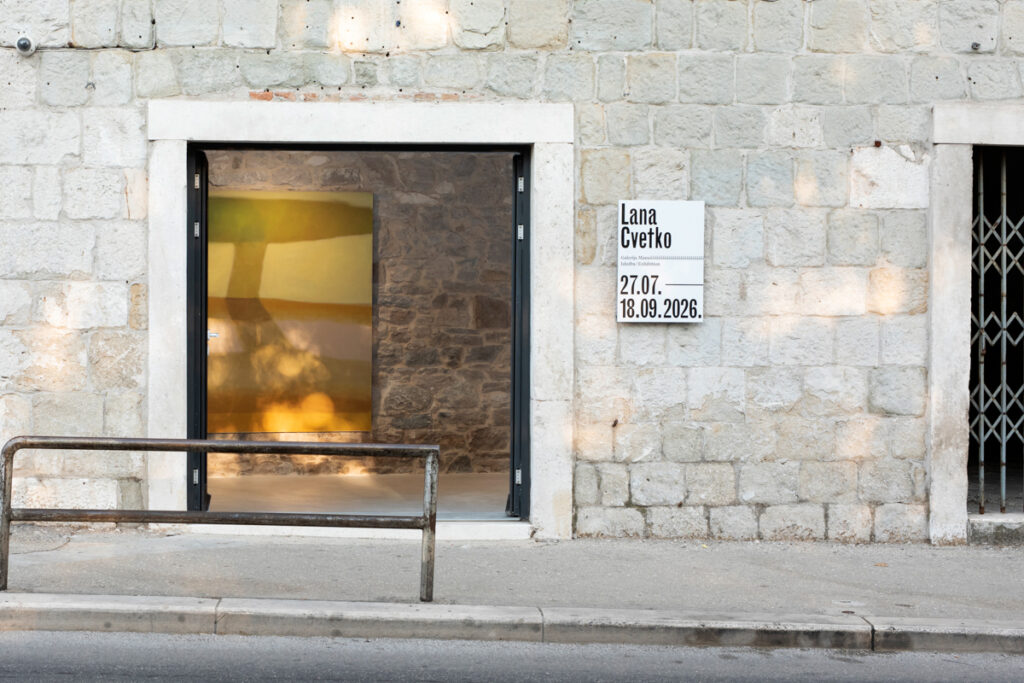
27. 7. - 18. 9. 2026. Galerija Manuš, Split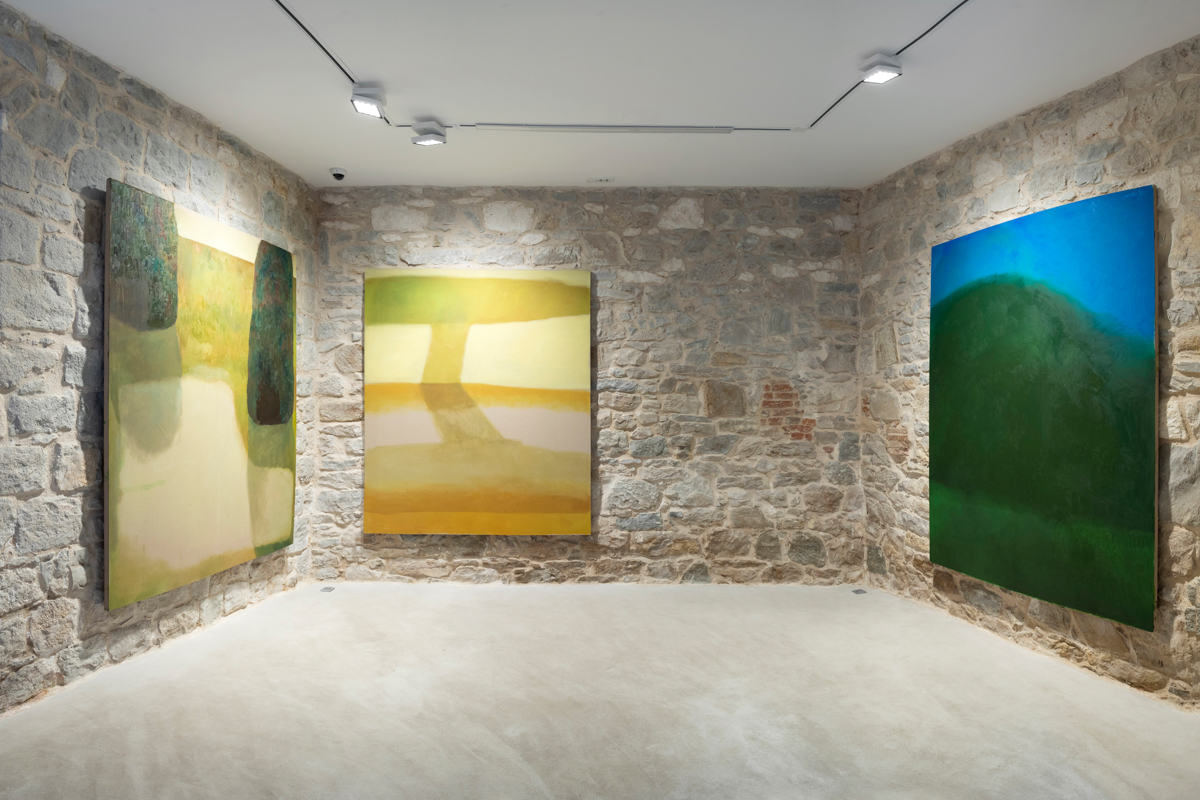
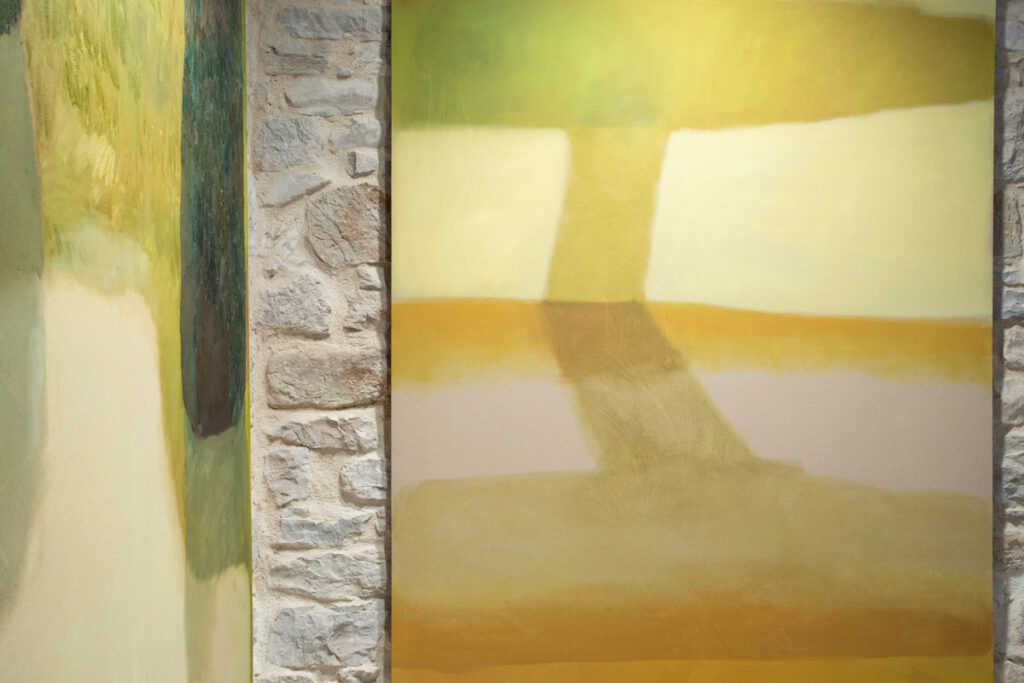
The Gaze That Remains
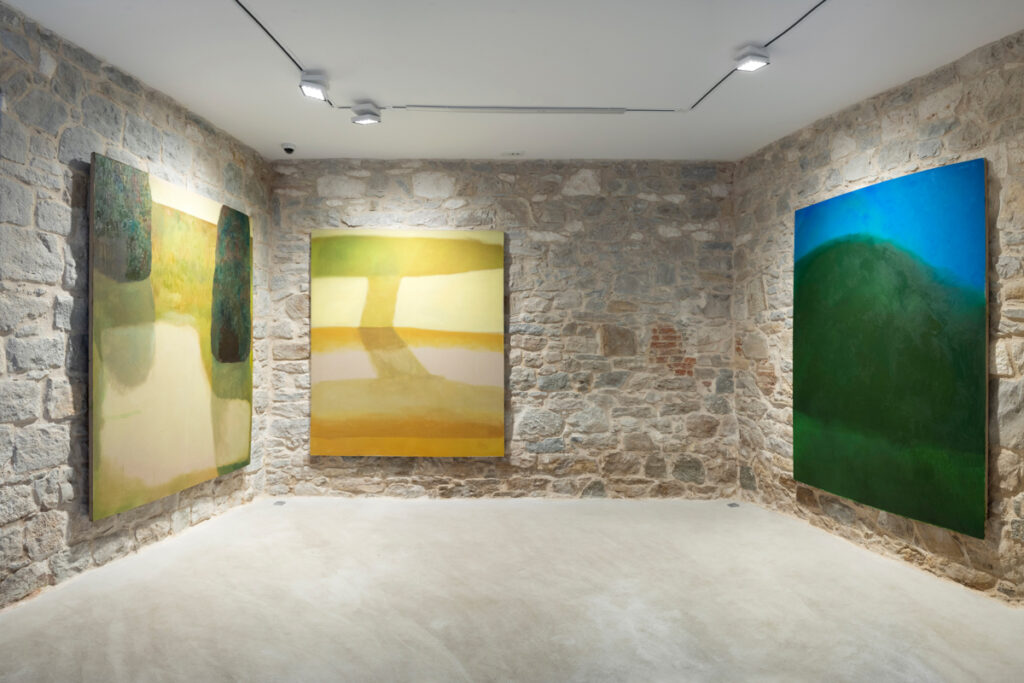
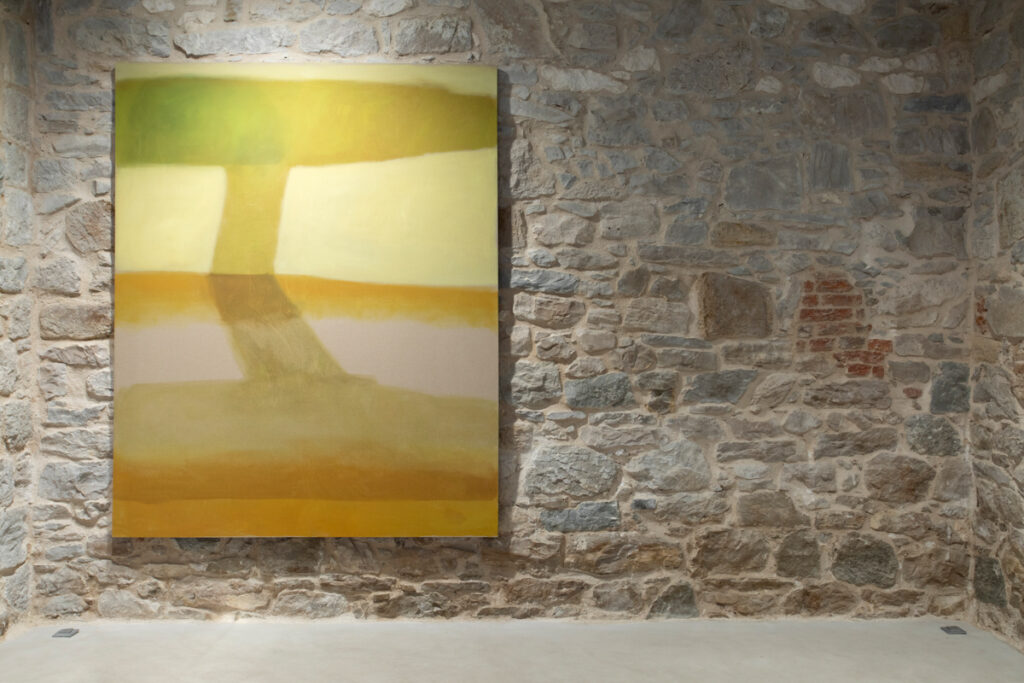
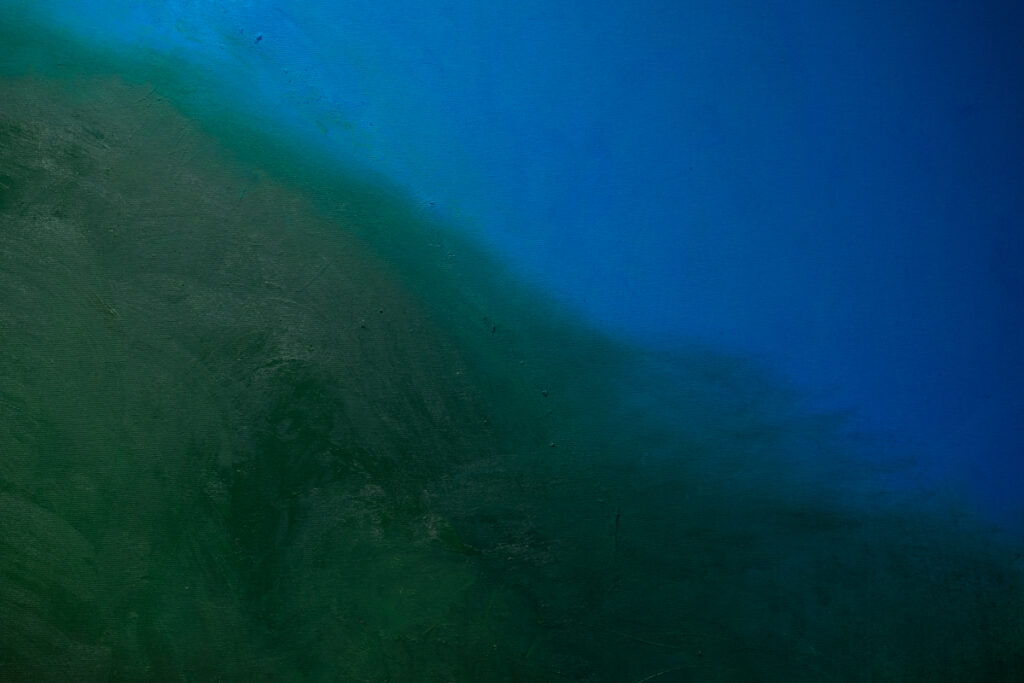
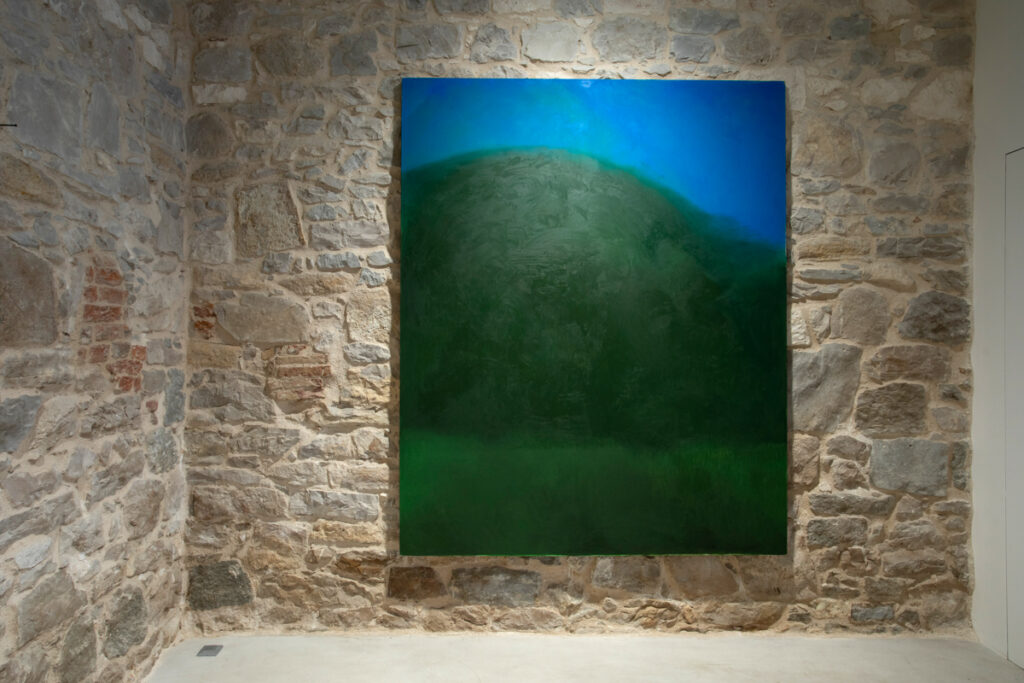
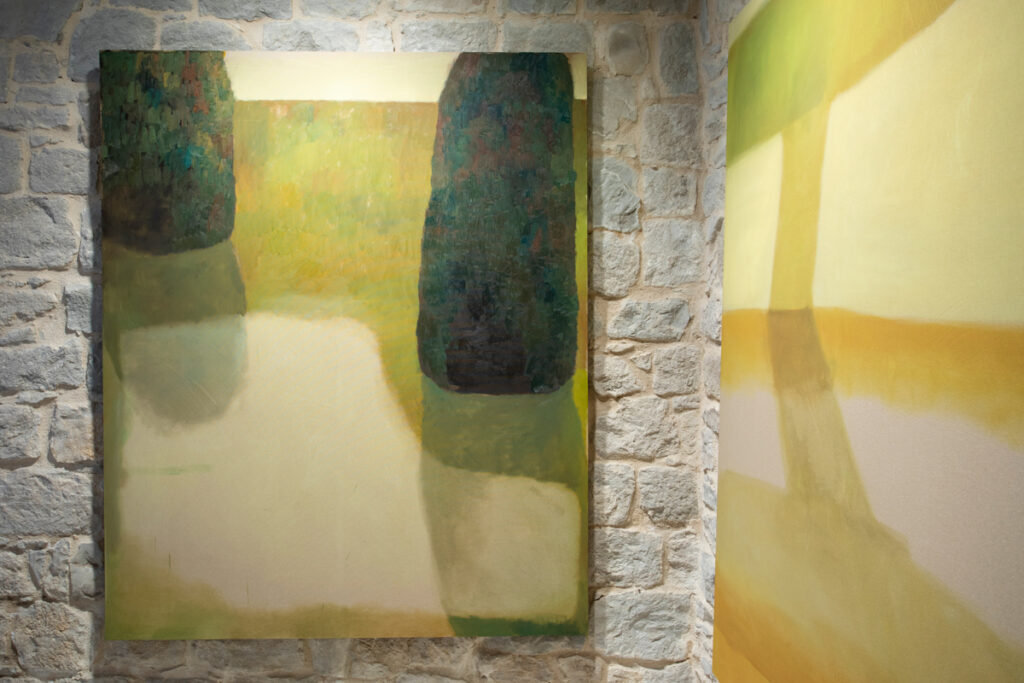
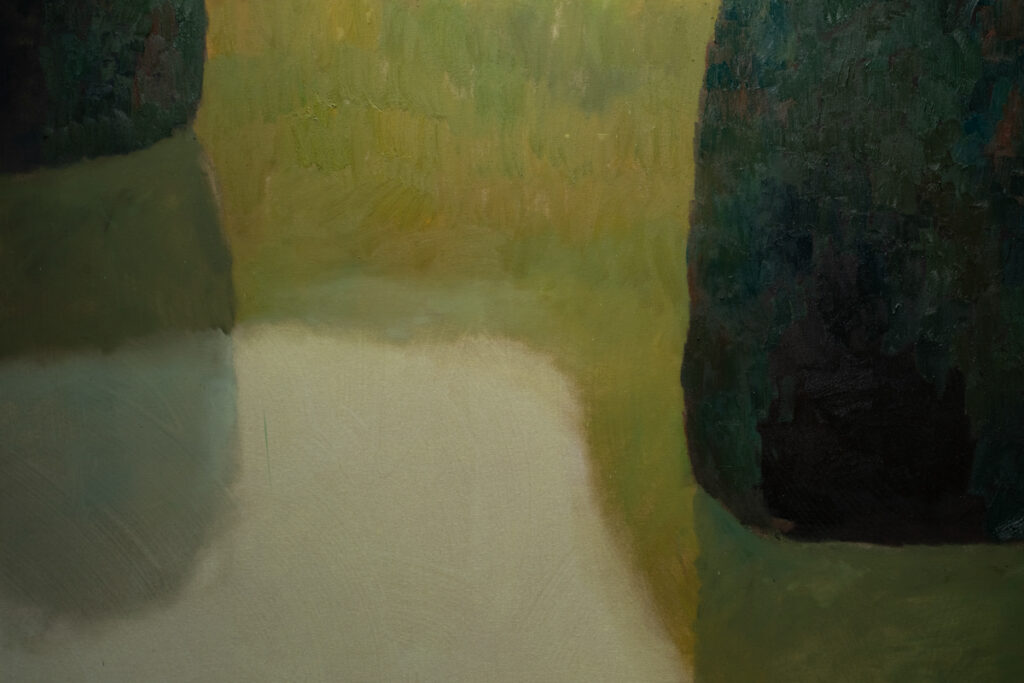
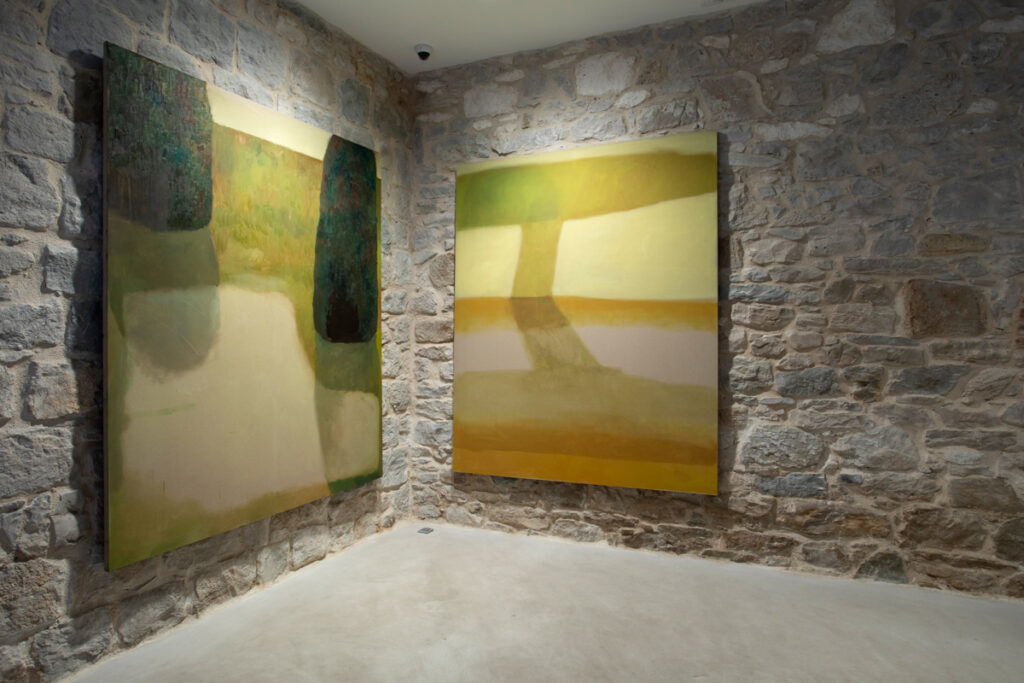
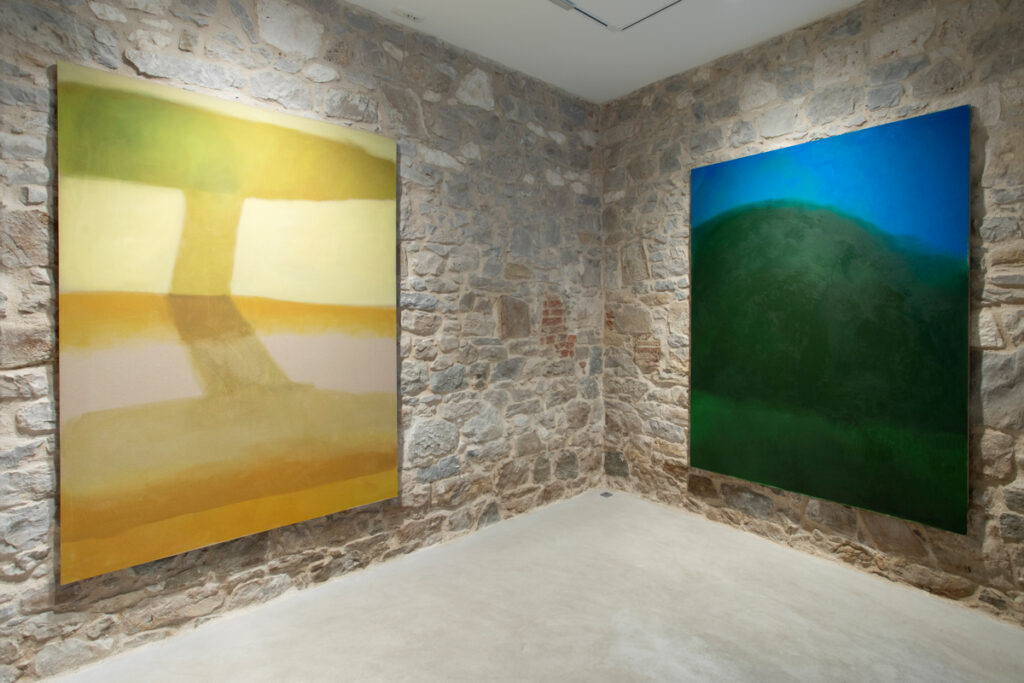
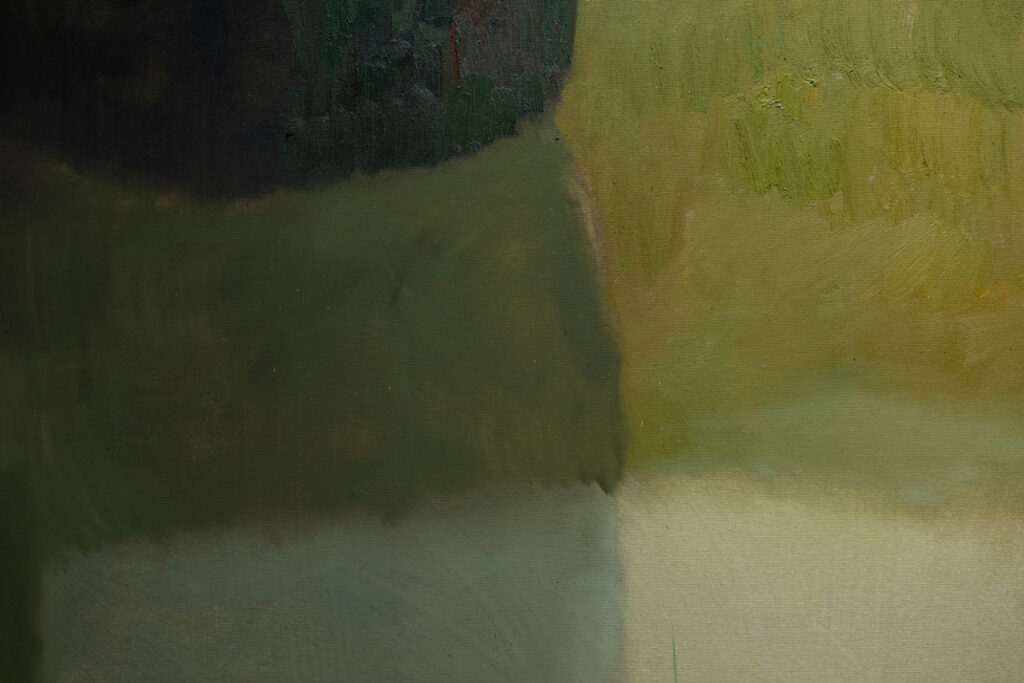
In Lana Cvetko’s paintings, nature emerges as a state that calls for sustained attention and prolonged observation. Landscapes, shrubs, hills, trees, stumps, paths, and lakes transcend their roles as motifs from the visible world, becoming sites of condensation, concentration, and perceptual inquiry. Although at first these spaces seem devoid of the human figure, it is precisely its absence that generates inner tension. The human body is missing, yet the gaze that isolates, arrests, names, and translates space into a painterly event is permanently inscribed in its structure. The paintings explore the relationship between natural form, painterly process, and the act of looking; the gaze seems to be an active, formative force, registering the world and bringing it into focus. Within the painting, a shrub, a tree, or a stump acquires autonomy, no longer merely a part of the landscape. The forms are dense and quietly resilient. The shrub is both a volume and a shadow, a trace of growth, a form of concentration, and a focal point of painterly attention. As it gradually loses its natural form, the plant is suspended between painterly fixation and life, between the materiality of the painting and that which eludes it. This tension not only defines the artist’s translation of nature into pictorial space but allows her to retain mystery, autonomy, and presence, establishing the fundamental dialectic of the cycle. Nature is depicted as a living system of perpetual change, while the painterly process places it within a space of arrested gesture, condensed pigment, and bounded surface. This act of fixation becomes a way of reactivating nature within another medium: through thick layers of paint, the quiver of green, yellow, brown, and dark hues, and the interplay of light and shadow, nature’s vitality becomes the painting’s inner dynamics. Mimetic resemblance gives way to a painterly equivalent of natural processes. Growth, decay, regeneration, and change are translated into the rhythm of brushstrokes, the density of pigment, and the tension of the surface. The landscape becomes a site where natural processes and the logic of painting converge. The motifs of the shrub, the tree, and the stump are particularly meaningful. These modest and often overlooked forms of nature are rarely given prominence; by relocating them from their usual peripheral position, the artist elevates them to principal subjects of painterly and conceptual focus. Shrubs are rendered as dark, compact, almost monumental masses. Trees create vertical axes that provide a sense of rootedness and orientation. The stump signifies interruption, a cut in growth, and serves as a reminder of original wholeness. In these motifs, growth is threatened, its vitality rendered vulnerable and exposed to external damage. The idealized image of nature thus gives way to a more complex experience of duration, defined by change, loss, and a persistent capacity for renewal.
This understanding of nature provides the enduring critical impulse that underpins these works, shaping the relationship between the viewer and the seen. Lana Cvetko strips the landscape of spectacle and narrative, redirecting attention to forms and processes that would otherwise remain peripheral to perception. The absence of the human figure undermines conventional hierarchies in painting. No longer a mere backdrop for human activity, nature emerges as a domain governed by its own rhythms, changes, and temporal continuities. This challenges the anthropocentric perspective that values nature according to accessibility, utility, or visual appeal. Each act of looking establishes a relationship with what is seen. The gaze selects, frames, and transforms natural forms into objects of aesthetic experience, enabling their symbolic appropriation. Cvetko’s paintings allow the gaze to engage with the scene, while revealing the limits of such engagement. Nature retains a degree of opacity, resisting reduction to meanings imposed by the viewer. It is precisely this limitation of human perspective that constitutes the critical force of the works. The landscape unfolds without promising complete visibility or intelligibility. It offers no central event to organize the scene according to the logic of human action. Instead, it reveals the slow processes of growth, decay, sedimentation, and renewal that occur on temporal scales far exceeding individual human experience. Our attention is directed toward forms of life that precede, coexist with, and outlast human presence.
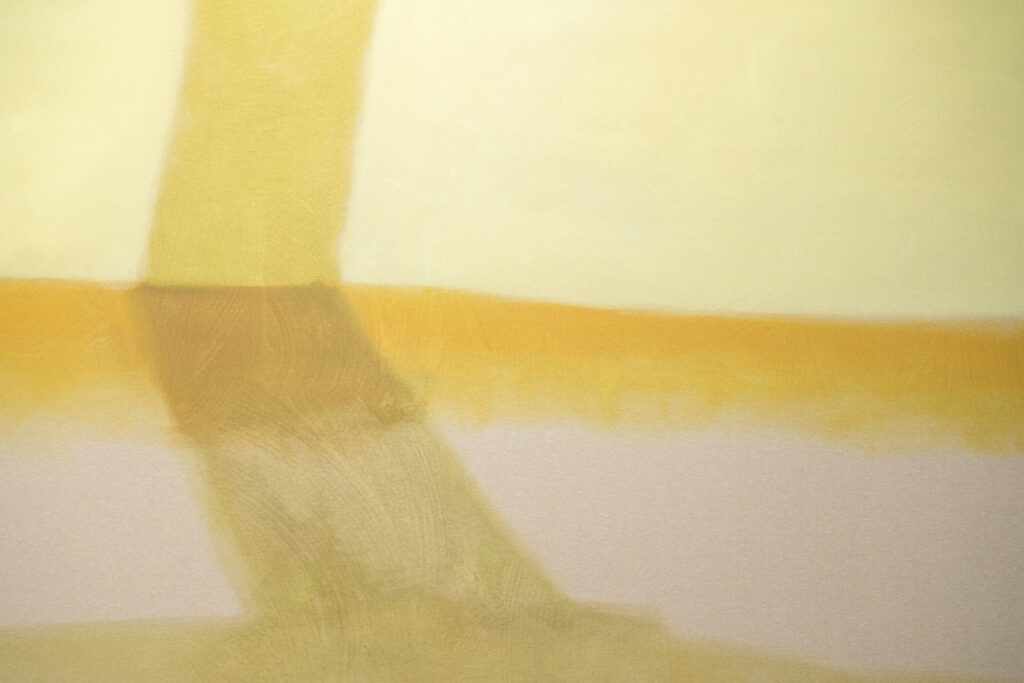
The formal structure of these works reinforces this interpretation. Compositions are often built around a limited set of straightforward relationships: sky and hill, tree and lake, shrub and field, path and vegetation, or light and dark masses. This economy intensifies both perceptual and conceptual density, as the reduced number of elements emphasizes their interrelations, material contrasts, and internal tensions. Emptiness assumes an active role, directing the gaze and allowing individual motifs to acquire heightened presence. Fields of colour construct space as an intersection of perception and memory, natural form and painterly matter, the state of things and the process of their transformation. Spatial depth frequently remains shallow or deliberately unstable, encouraging the gaze to linger on the painting’s surface and the means of its construction. Colour brings recognizable elements of the landscape into view while asserting its own material presence. Visible brushwork, shifts in pigment density, and overlapping tonal layers bear witness to the artist’s hand and to the effort to translate the natural processes into the language of painting.
Lana Cvetko’s paintings ultimately explore the conditions under which nature becomes visible. Extracted from its environment and translated into the language of painting, the motif changes its mode of appearance. While the natural form remains recognizable, it acquires additional material, spatial, and symbolic dimensions. The shrub, the path, and the stump become condensed signs of duration, movement, human presence, interruption, and renewal. Their polysemy arises from a continuous negotiation between naming and perception. Recognition of the motif provides the initial point of orientation, while its painterly treatment gradually releases it from fixed meaning. The viewer is confronted with a familiar form that resists immediate classification, enabling a different relationship to nature – one grounded in vigilance, time, and an acceptance of the limits of one’s own perception.
The exhibition avoids the Romantic concept of nature as a pristine refuge removed from the human world. These landscapes bear the traces of human presence, intervention, and withdrawal. Paths cut through the vegetation, tree stumps testify to acts of felling, and the structured spatial relationships point to a landscape that has already been observed, used, and shaped. The human body remains outside the frame, yet the consequences of its actions are inscribed in the structure of the scene. The absence of the figure is thus the critical locus of the work, a space in which the effects of human involvement are considered without the visual dominance of the human figure. This perspective raises the question of the responsibility of the gaze. To look at nature is to acknowledge the position from which one looks, the traces one leaves behind, and the relations of power embedded in the ways of representing the environment. Lana Cvetko articulates this responsibility indirectly, through a deliberate slowing of perception and a resistance to the rapid consumption of images. Her paintings invite sustained attention, allowing their meanings to unfold gradually through the act of looking. It is precisely this slowing down that gives the series much of its power. Nature emerges as an active presence whose span does not coincide with the tempo of the human gaze. The paintings temporarily arrest nature’s forms while pointing to processes that continue beyond the depicted moment. Looking becomes an exercise in attentiveness and a way of recognizing that our ways of seeing are deeply embedded in the world we inhabit. The landscape thus emerges as a living, ever-changing relationship that calls for patience, responsibility, and a willingness to learn to see anew. ( text by Dalibor Prančević)
Lana Cvetko was born in 2004 in Varaždin, Croatia. In 2022, she graduated from the First Gymnasium Varaždin, where she completed the International Baccalaureate Diploma Programme (IBDP). In the same year, she enrolled at the Academy of Fine Arts in Zagreb, where she is currently completing the fourth year of her undergraduate studies in Painting in the class of David Maljković.
She has participated in several group and solo exhibitions, including: VGA Program, Gallery SKC (2025); Sources of Youth, Đurđevac Town Museum (2025); International Colour Day, Technical Museum Zagreb (2025); J.F. Quartet, Vladimir Filakovac Gallery (2025); the solo exhibition Mould, P4 – Centre for Youth and Independent Culture (2025); Erste Fragments 21, Lauba (2025); At the End of the Small Hours, Ethnographic Museum Zagreb, in collaboration with WHW (2025); and MaDa uKleti, KLET Studio Gallery (2026).