


Bojan Stojčić
Discoteca Mediterranea
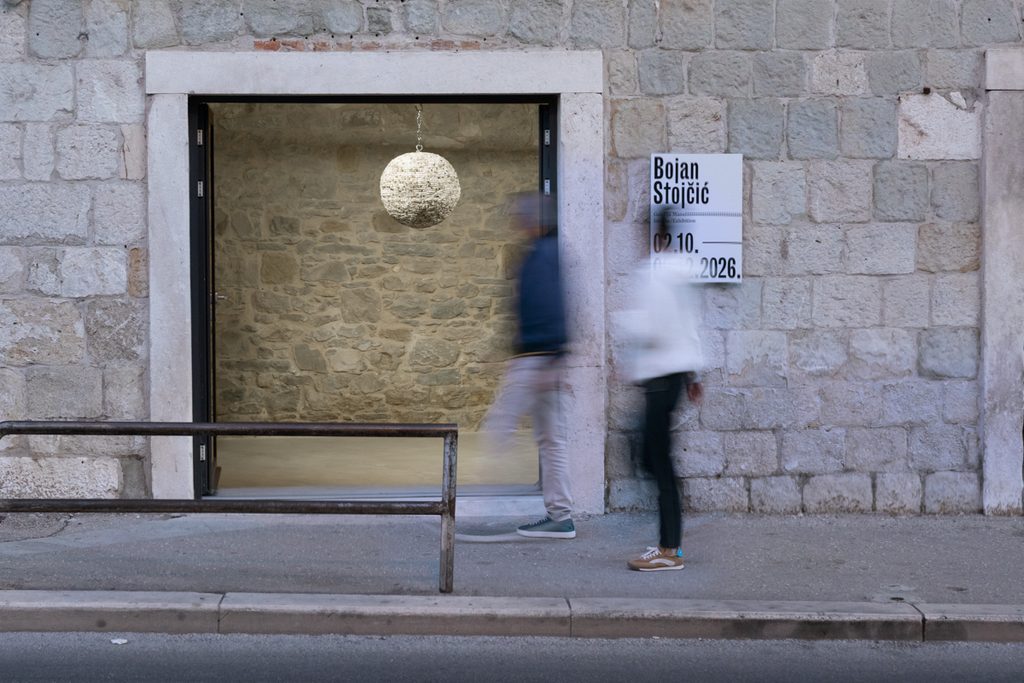
2. 10. - 2. 12. 2026. Galerija Manuš, Split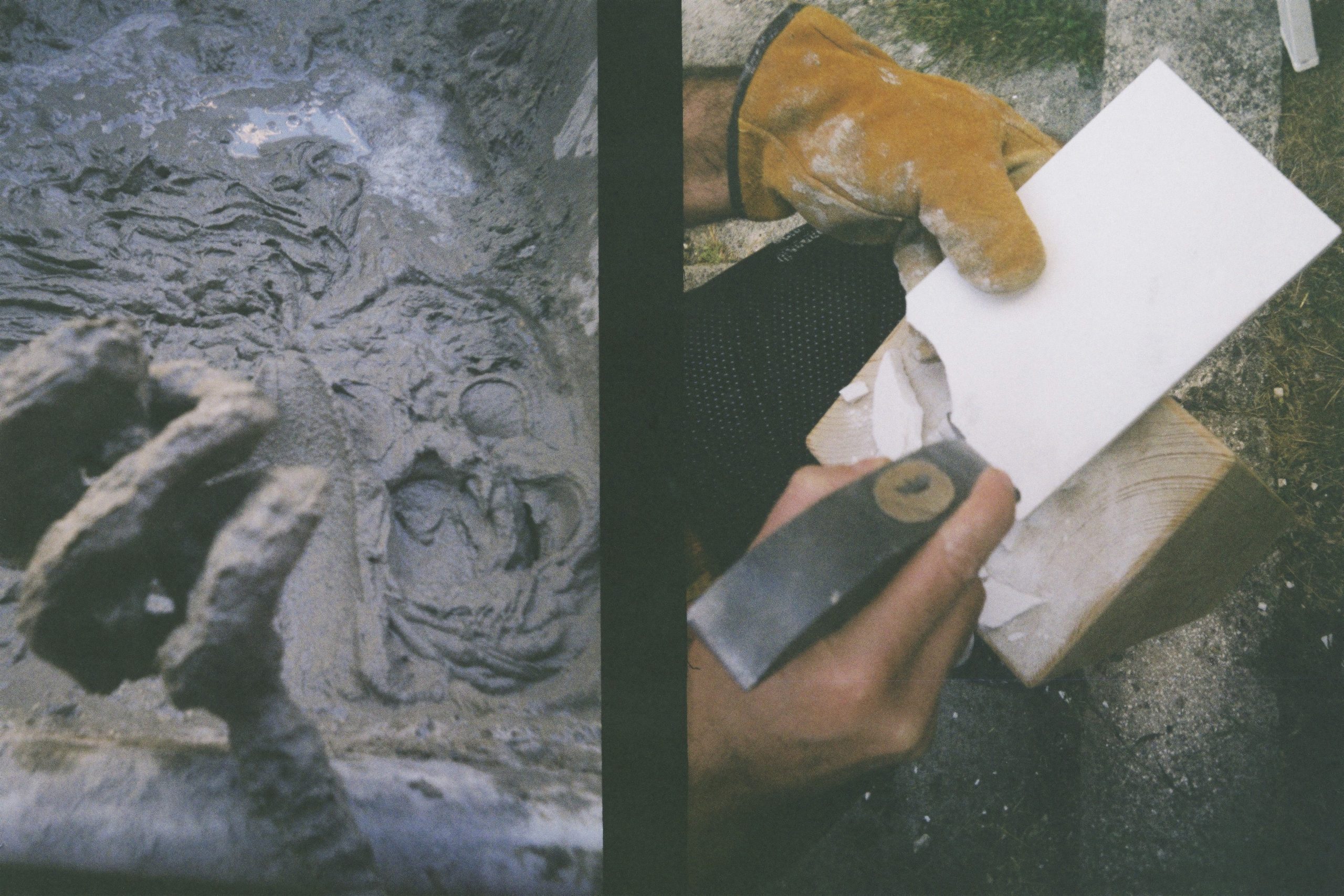
The south wind returns with the scent of the sea
As first raindrops fall, gloom settles on me
It’s this old wind that makes me confess
I lost my dreams in this long loneliness
Krunoslav Kićo Slabinac, South Wind, music by Alfi Kabiljo, lyrics Krste Juras
Discoteca Mediterranea marks a series of firsts in Bojan Stojčić’s work: his first solo exhibition at Manuš Gallery, and his first foray into mosaic. This new medium, however, does not signal a departure from his longstanding themes: Stojčić continues to explore the relationship between center and periphery, geopolitical Otherness, migrations, borders, belonging, and unbelonging – this time not through language, film, photography or cartography, but embedded within the material itself.
Stojčić has long relied on minimalist gestures and a nuanced interplay between language, site, and context. In No Trace Promises the Path, he linked textual interventions to specific locations, whereas his recent focus has shifted toward the body, architecture, and space. Rather than imposing a pre-set form, Stojčić allows various media respond organically to the subject at hand.
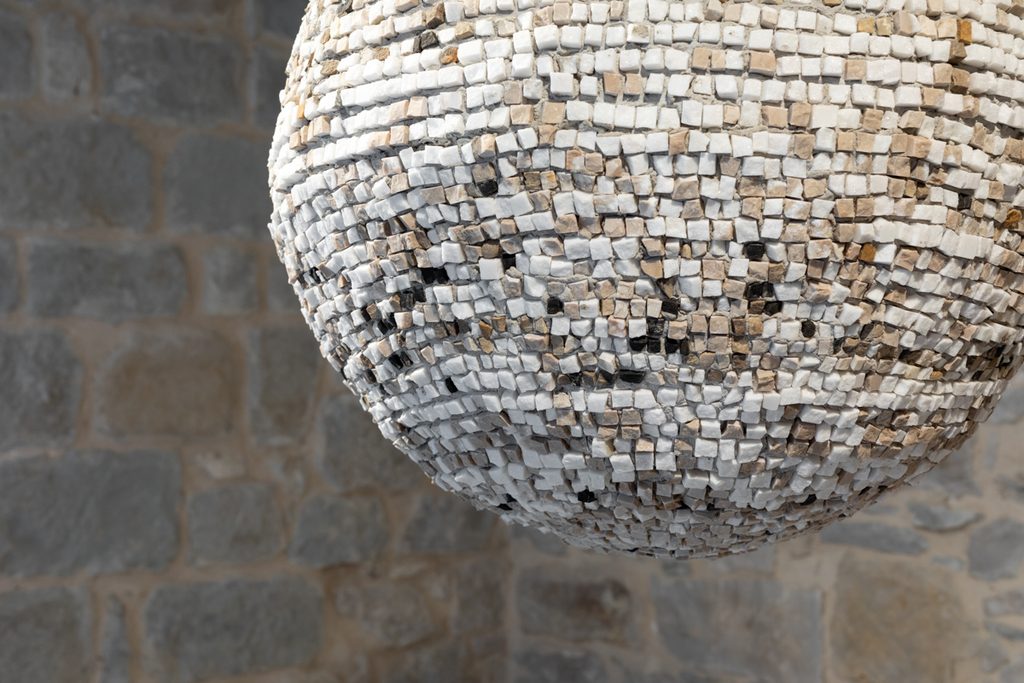
Discoteca Mediterranea once again addresses the dynamics of center and periphery, but not as a static geographical division; their positions shift with the movement of materials, people, and values. Migration is never directly depicted; instead, it is felt through materials that embody the geography of extraction, relocation, and repurposing. The crucial question is not what the mosaic depicts, but what it is made of. This highlights Stojčić’s artistic process: rather than choosing a theme and illustrating it, he allows the medium to become an active participant in the work. Stone here ceases to be a neutral carrier of the image. Every piece of the mosaic has a specific geological origin, and before it becomes a tessera, it must be extracted, relocated, broken down, processed, and reintegrated into a new whole. Stojčić introduces the concept of the mineral migrant – not as a simple analogy, but as an inquiry into different regimes of movement. Materials, goods, capital, tourists, and the displaced all travel the same terrain, but they do not cross borders under equal conditions.
In this sense, Discoteca Mediterranea continues the strategy from Reverse Danube (2025) where migration is conveyed not through figures of migrants, but through a changed geography. Relocation is embedded in the history and circulation of the material itself. While mosaic is a new medium for Stojčić, stone is a recurring element. It was already referenced in the title of his 2014 installation La storia appartiene alla pietra, il futuro al vento, as well as the later History to the Stone, Future to the Wind from 2021.
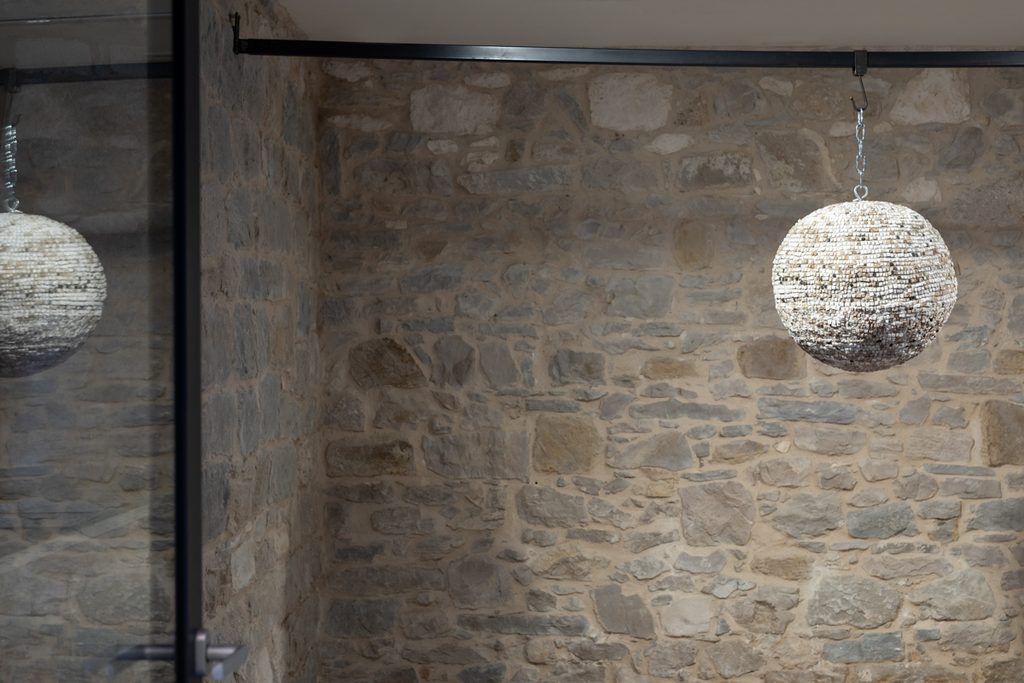
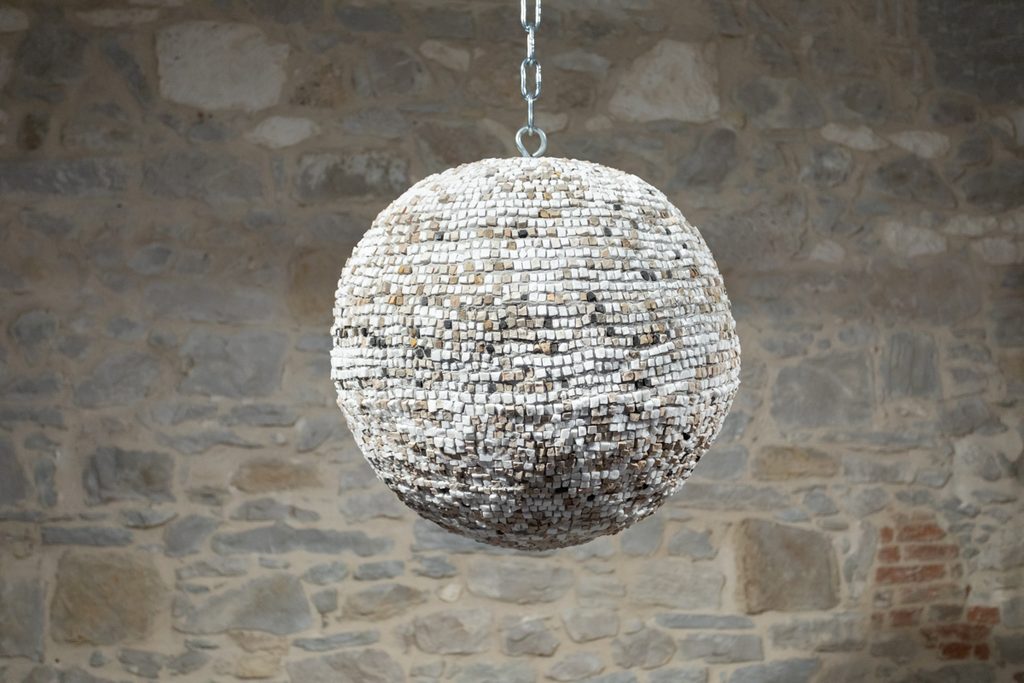
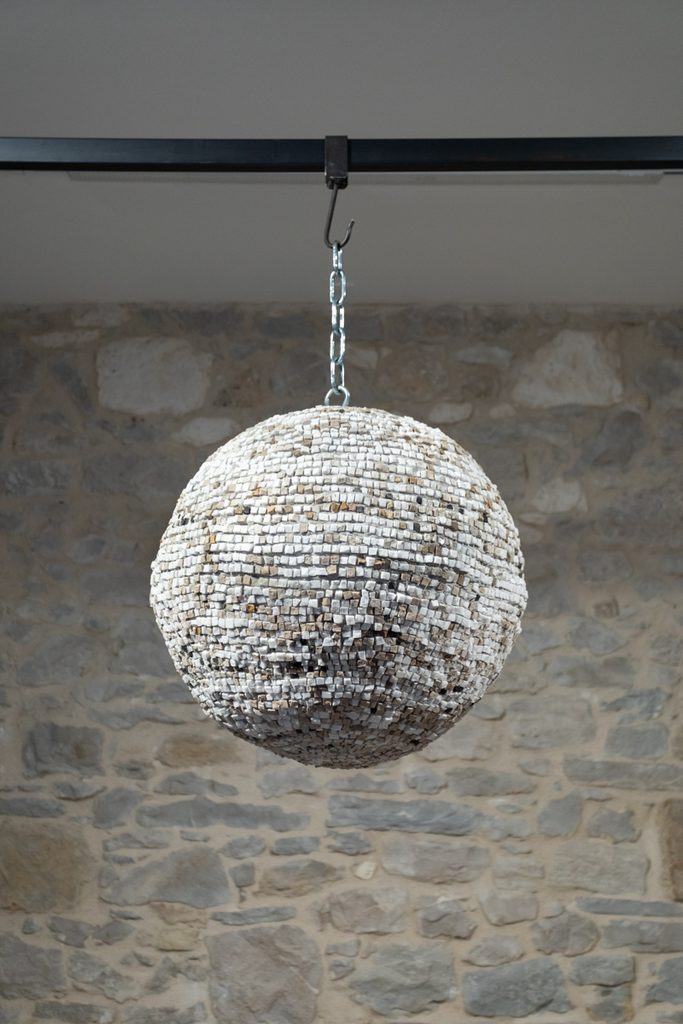
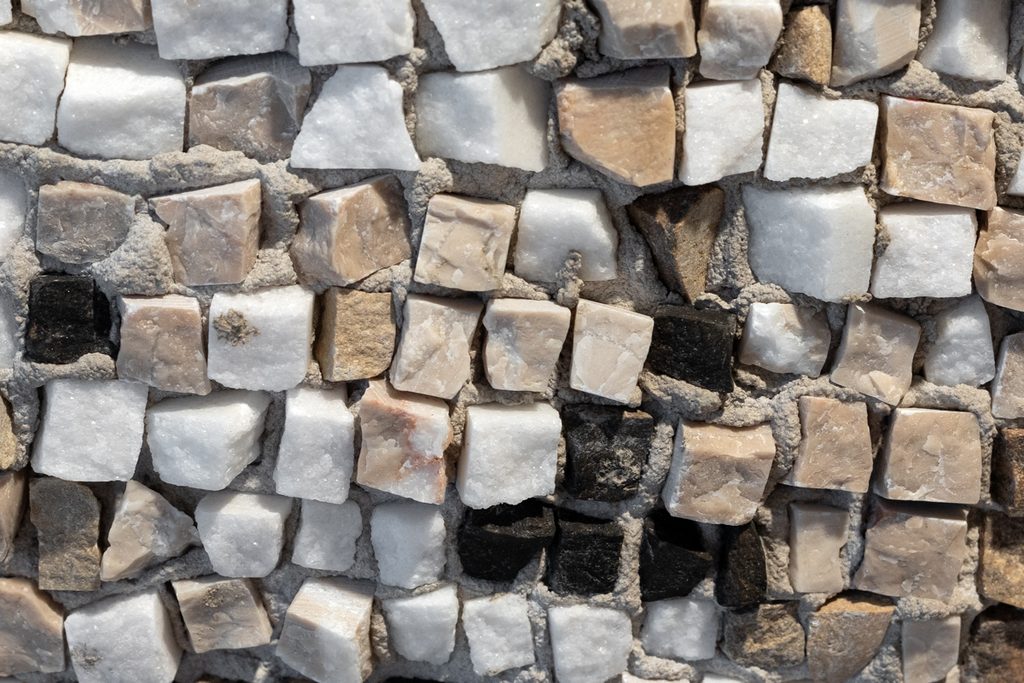
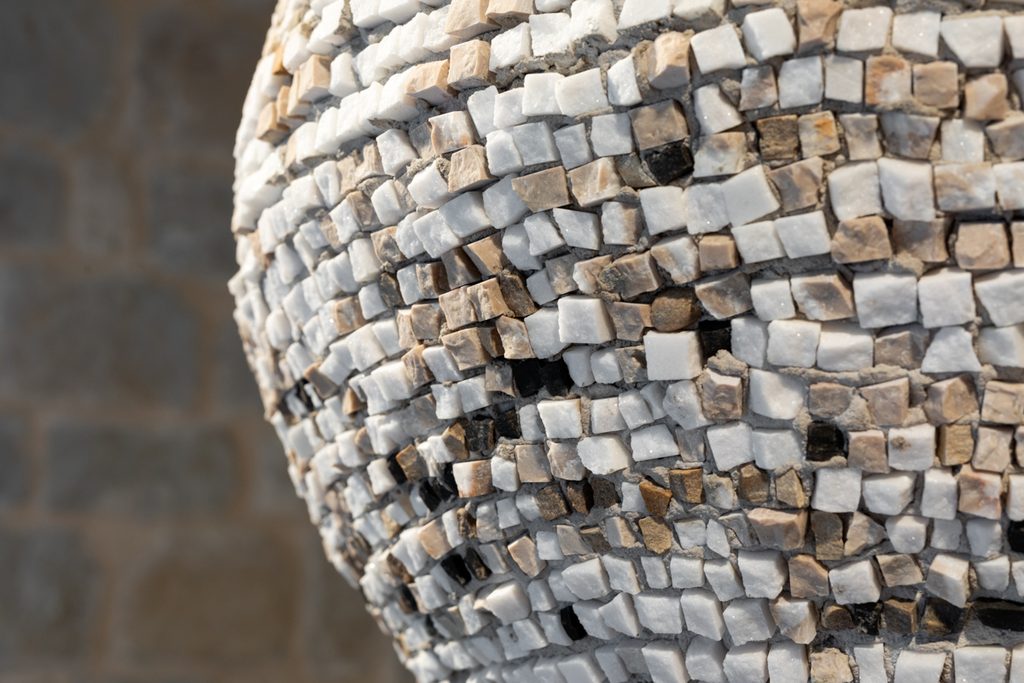
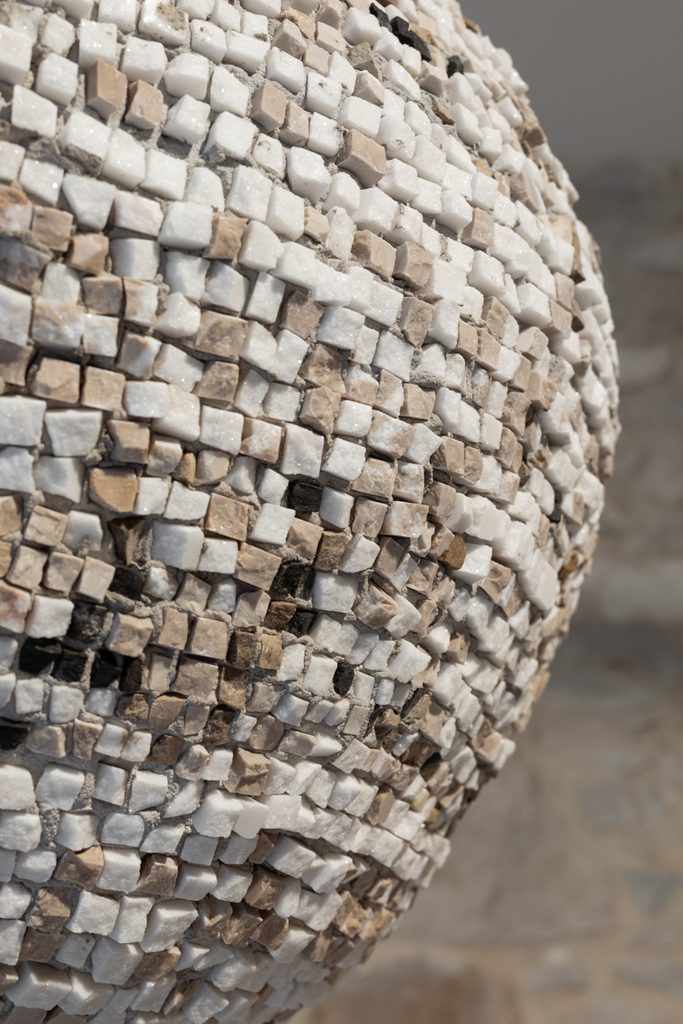
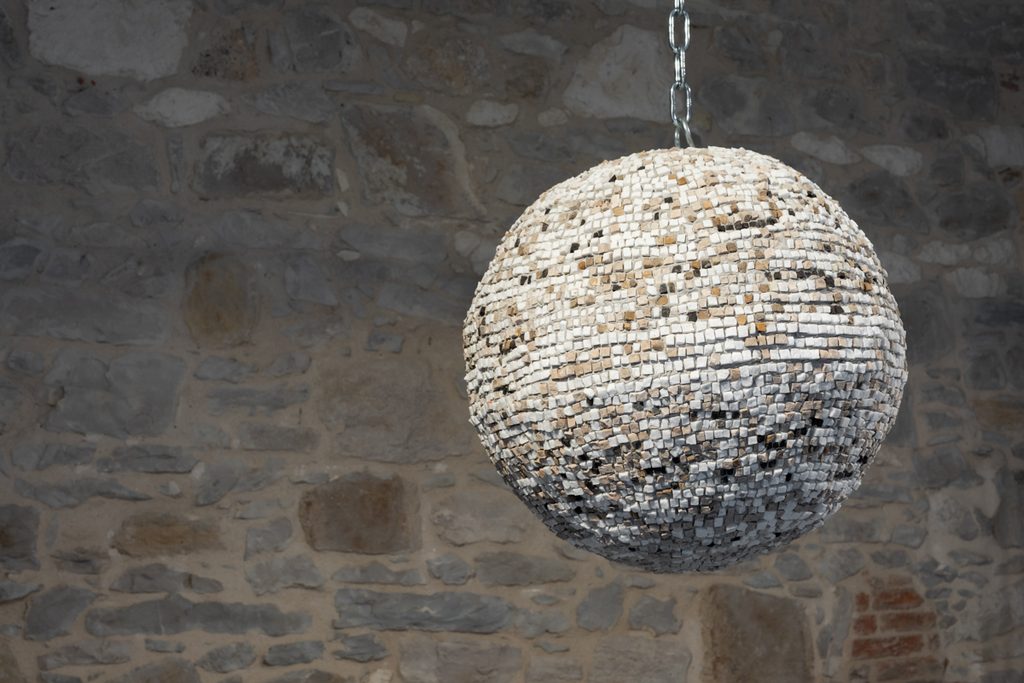
In Discoteca Mediterranea, the artist does not intervene in an existing stone object; instead, he spends months preparing the material, breaking it with a diamond hammer and shaping individual tiles. Stone is more than a surface upon which history is inscribed; before history, there is geology – and before monumentalization, there is extraction. This slow, physically demanding process is neither a performance nor an attempt to heroize the artist’s labor. What takes months to achieve in the studio, in another setting, simply the daily labor of those who extract and process stone. At the same time, the artist’s relationship to his own work changes: a conceptually minimal gesture gives way to a long and repetitive physical process transforming raw, uneven material into a series of nearly uniform units. The choice of mosaic anchors the work in a much longer timeline: tracing the relationship between center and periphery through the rise and fall of empires, the medium evokes long-lasting imperial cultures. Furthermore, it retains a connection to architecture, but here entirely displaced: no longer bound to a wall, it is a sphere suspended in space.
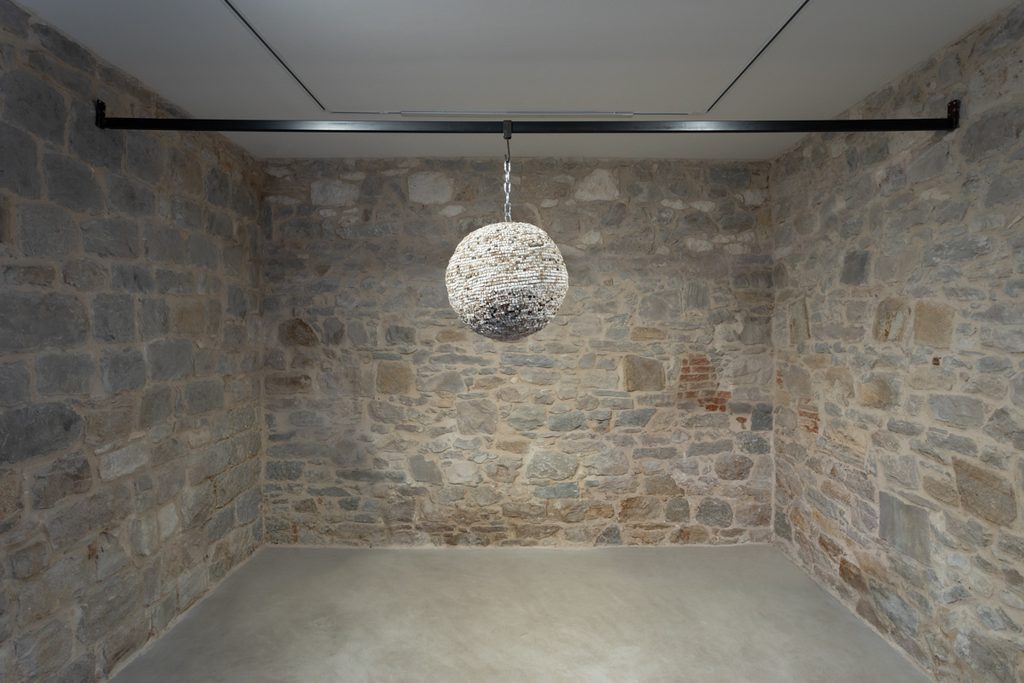
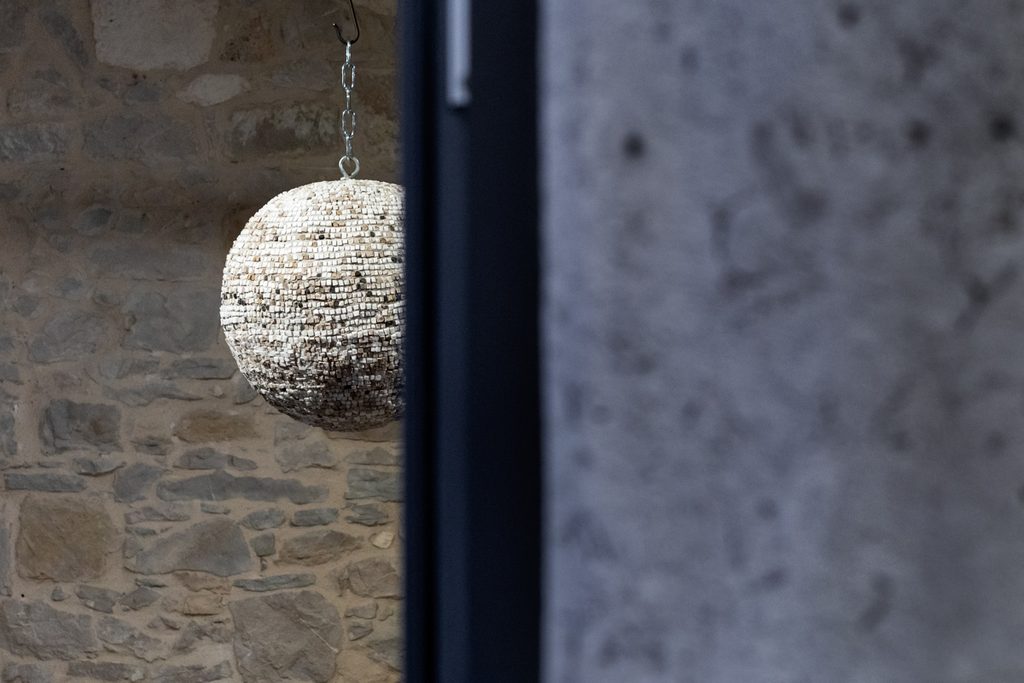
This displacement drives the primary tension of the work: while mosaic is heavy, architectural, and tied to permanence, a disco ball conveys levity, light, motion, and the fleeting night. Discoteca Mediterranea emerges from this seemingly impossible synthesis. The white marble, the gray, brown, and yellow tones of various stones, and the dark anthracite mimic the fractured faceting of a disco ball, only here light meets stone instead of mirrors. The material we expect beneath our feet or built into a wall is suspended above our heads, making the visual lightness of the object inseparable from an acute awareness of its actual weight. Ultimately, the sphere evokes a globe stripped of borders: continents and states are replaced by materials of diverse origins. Yet, the dynamics of center and periphery remain present in the questions of where the stone is quarried, the routes it travels, and where it accrues new value. The title of the work opens up yet another geography of the same space. The Mediterranean enters the installation through stone, light, and disco music from various shores, stretching from Spain and Morocco to Turkey. This creates a map charted by materials, rhythms, and circulation rather than geopolitical boundaries. The Mediterranean is here neither a unified cultural space nor purely a site of borders and suffering; it is a complex tapestry of tourism and migration, trade and extraction, pleasure and violence, of close ties and radically unequal freedom of movement.
Discoteca Mediterranea continues the inquiry into center, periphery, belonging, and Otherness that runs through Stojčić’s work to date, yet instead of organizing these themes through textual or cartographic imagery, the artist uses a material that inherently carries its own geography. The borderless sphere is composed of fragments extracted from different places, broken down, and reconnected into a single whole that simultaneously evokes a planet, an ancient mosaic, and a disco ball. Heavy stone becomes an object of light, music, and transient togetherness, but at the same time it hangs as a suspended threat above our heads.
Ana Kovačić
Bojan Stojčić (1988) is a Bosnian-Herzegovinian visual artist. Most recently, he was a recipient of the Gallery Award at the 32nd Nadežda Petrović Memorial (Serbia, 2024), Young Visual Artist Award – ZVONO for the best young artist in BiH (BiH, 2023), WHW stipend for artists on the rise (Croatia, 2022) and Revizor stipend for advances in science and art (BiH, 2022). With a simple and reduced visual language, Stojčić’s work marks places of belonging on the brinks of histories, empires and given positions within.
Recent shows: Technologies of Peace: Art and Transition in Contemporary Europe (1989–2026) (IMMA, Ireland, 2026), Antifascism: Now (Lothringer 13 Halle, Germany, 2026), Art Encounters Biennial 2025: Bounding Histories. Whispering Tales (Art Encounters Foundation, Romania, 2025).