


Kemil Bekteši
Shade is Shade is Shelter
3. 9. - 23. 10. 2026. Galerija Manuš, Zagreb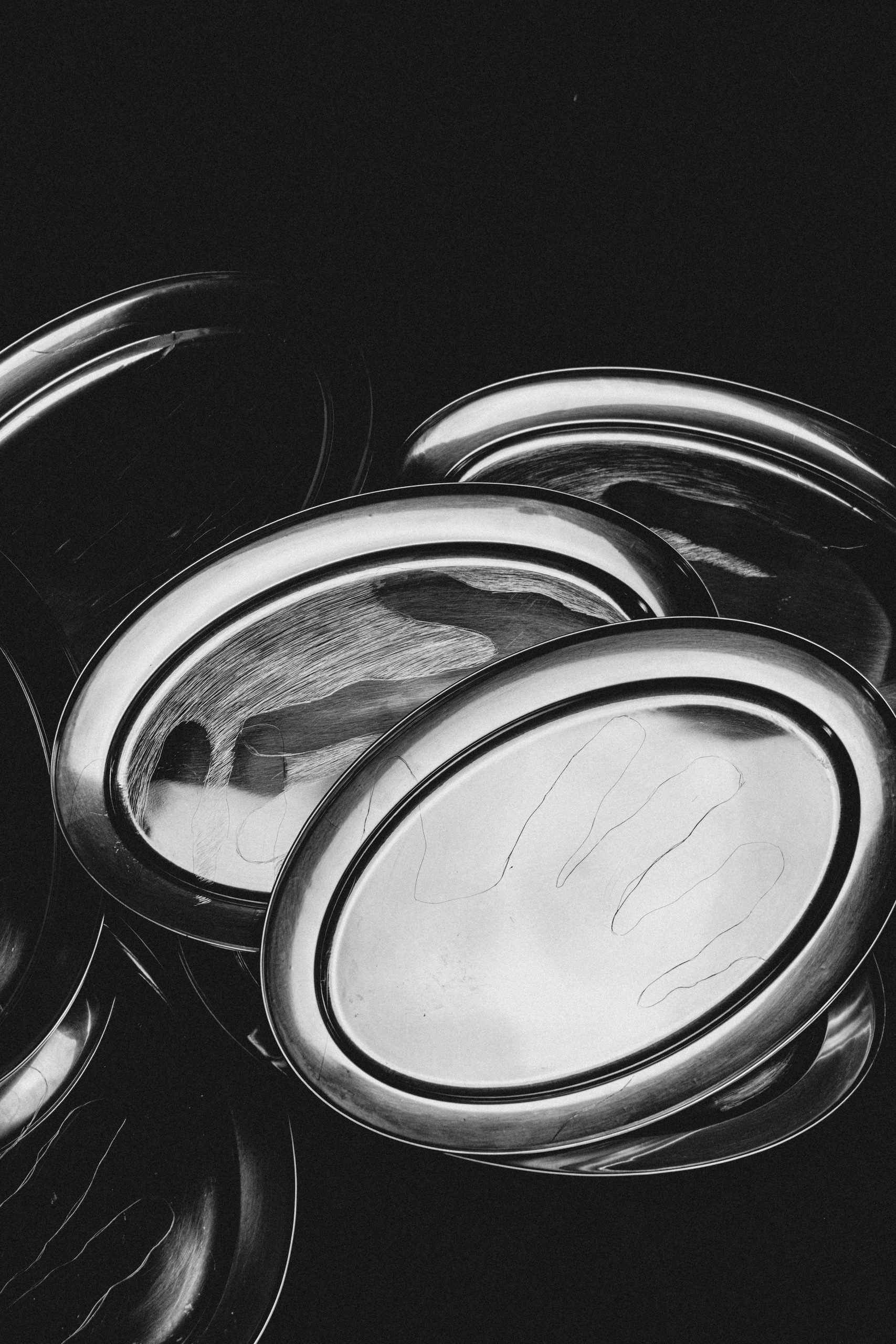
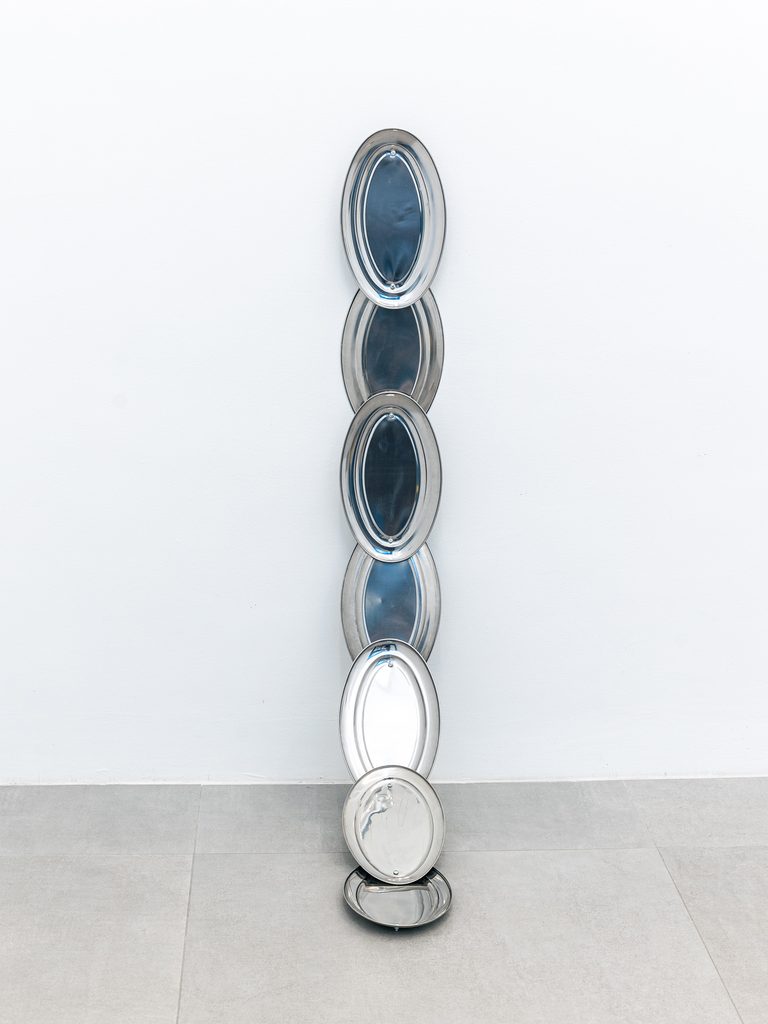
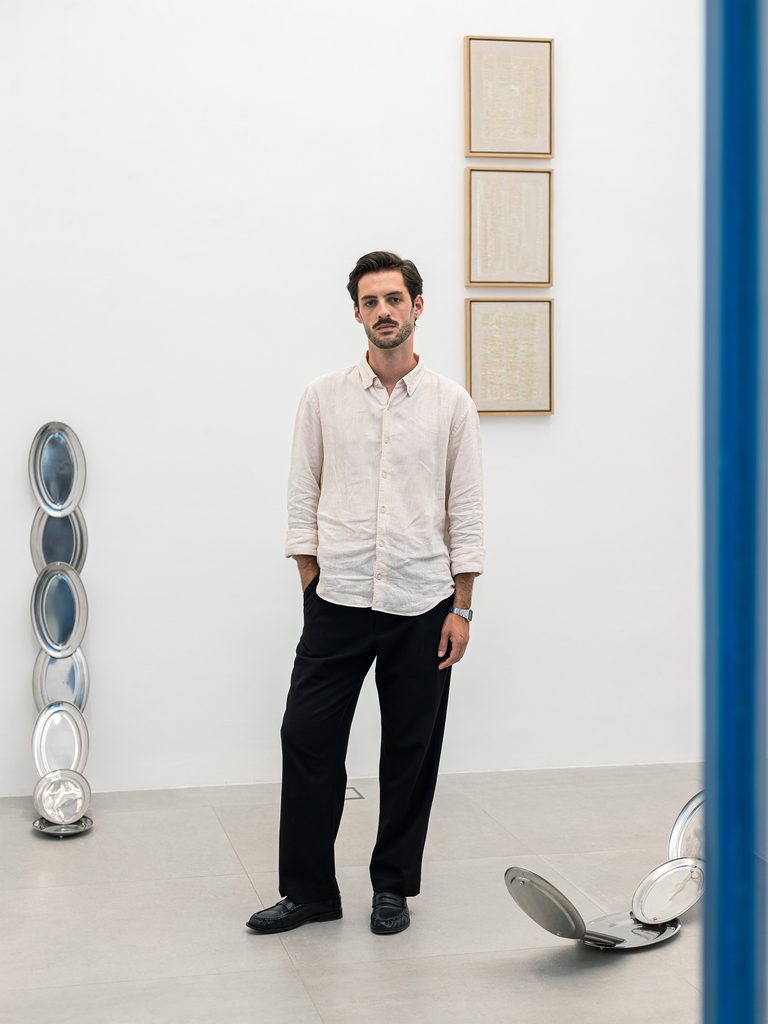
Drawing from personal and lived experience, artist Kemil Bekteši connects family history with themes of labor, identity, migration, and belonging throughout his artistic practice. His first solo exhibition Shade is shade is shelter at Manuš Gallery explores humanity’s need to leave a personal mark in the places we call home. A place of life and experience, either built or inherited, home is a shelter where the stories, actions, and memories of past generations leave lasting imprints on our objects, habits, and bodies.
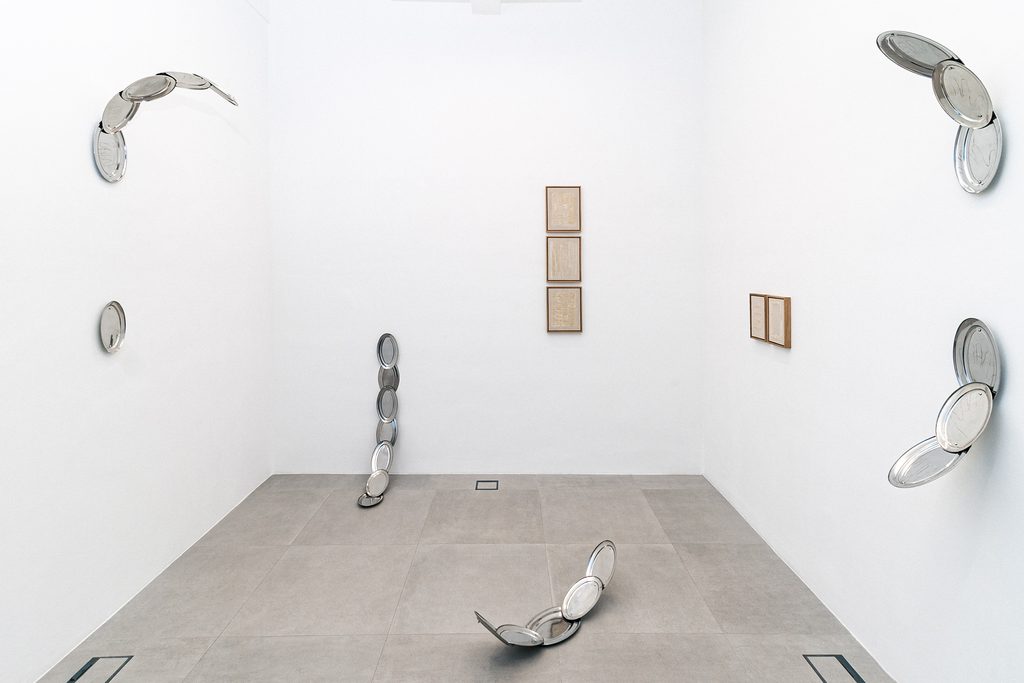
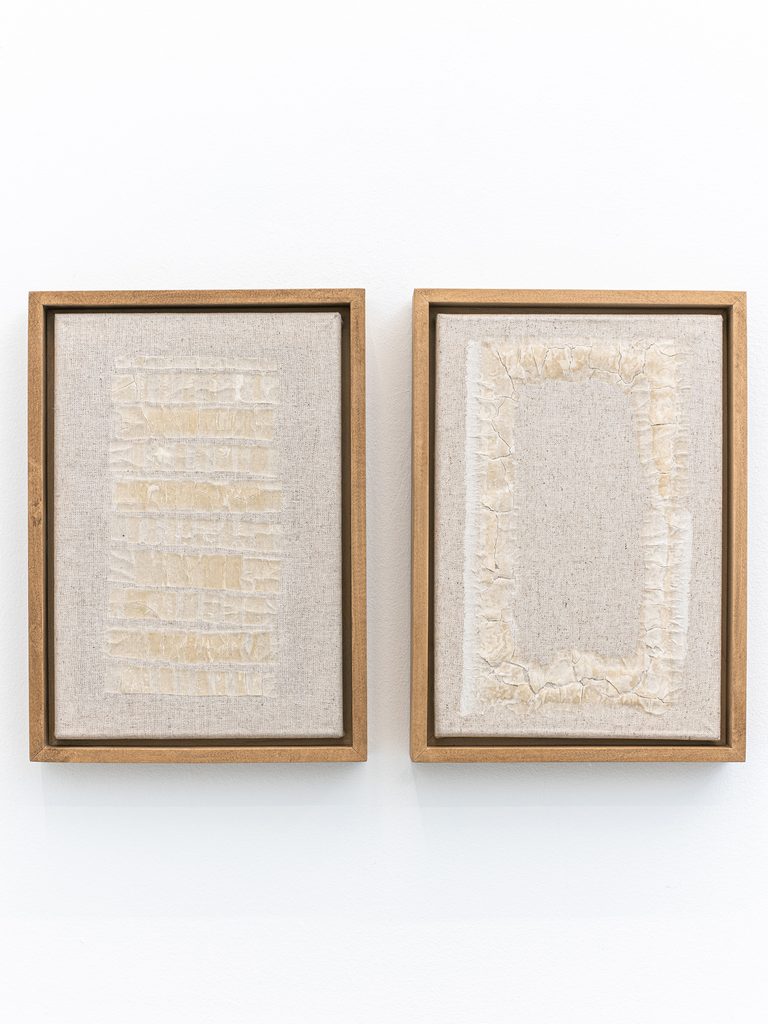
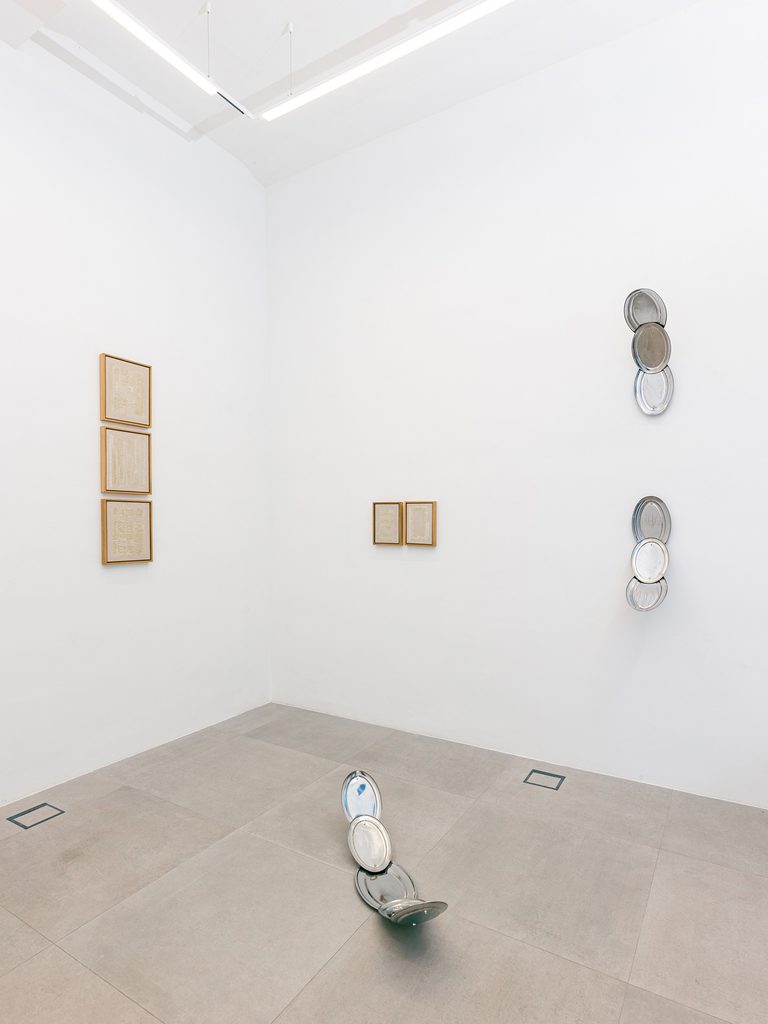
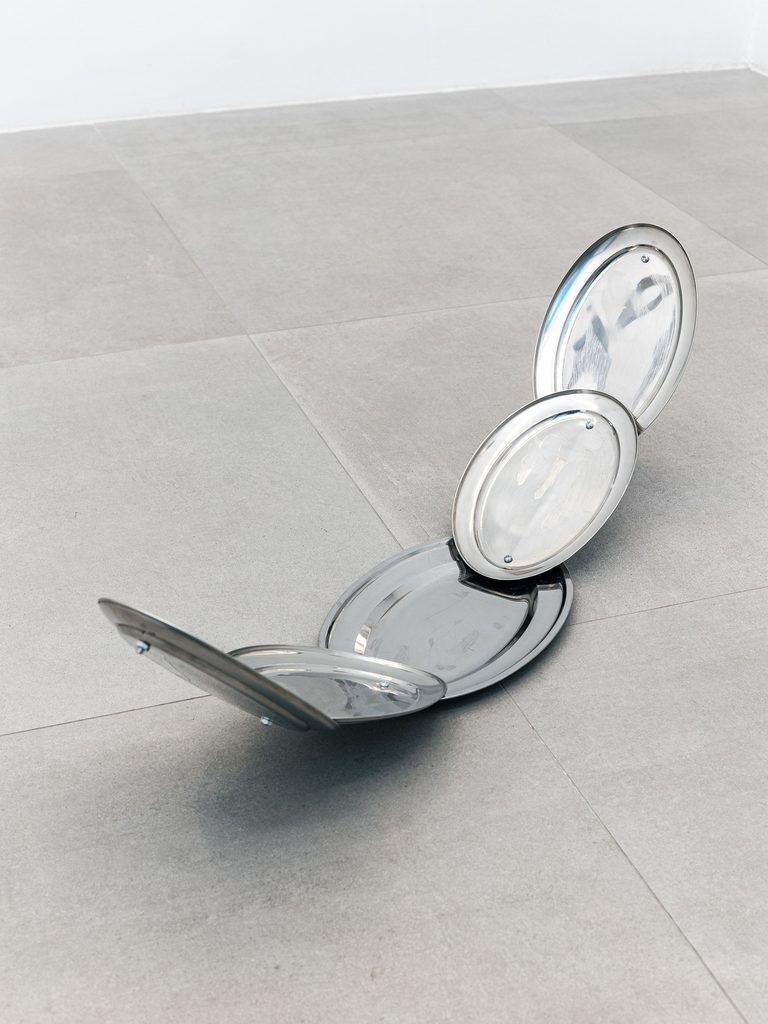
The show title comes from the phrase Shade is a shade, you notice it only when you need its shelter or when it stands in your way¹, highlighting the intricate relationship between the body, space, and the universal need for shelter/safety. The show features two works: the installation Cave and the assemblage series Studies: The One Before Me and the One Before Them. The interaction between utilitarian objects whose surfaces preserve the memories of hands shaped by years of labor, hardship and sacrifice (Cave), and relics crafted from the products of that labor – such as jufka (Studies…) – creates an intimate domestic space, evoking a generation that continues to provide shelter, support, and care for their loved ones.
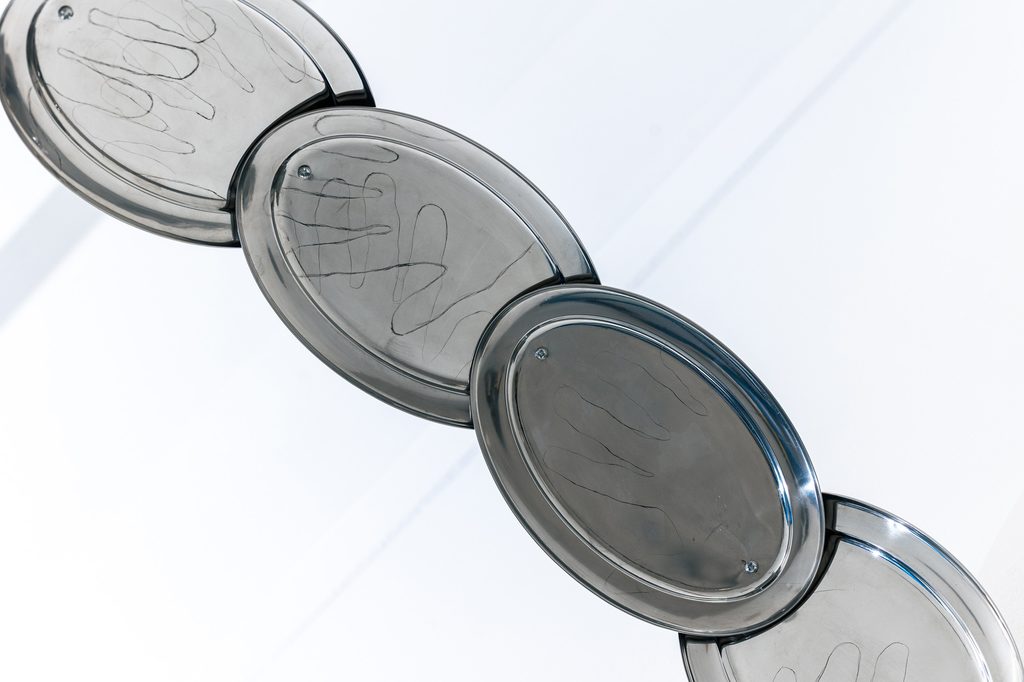
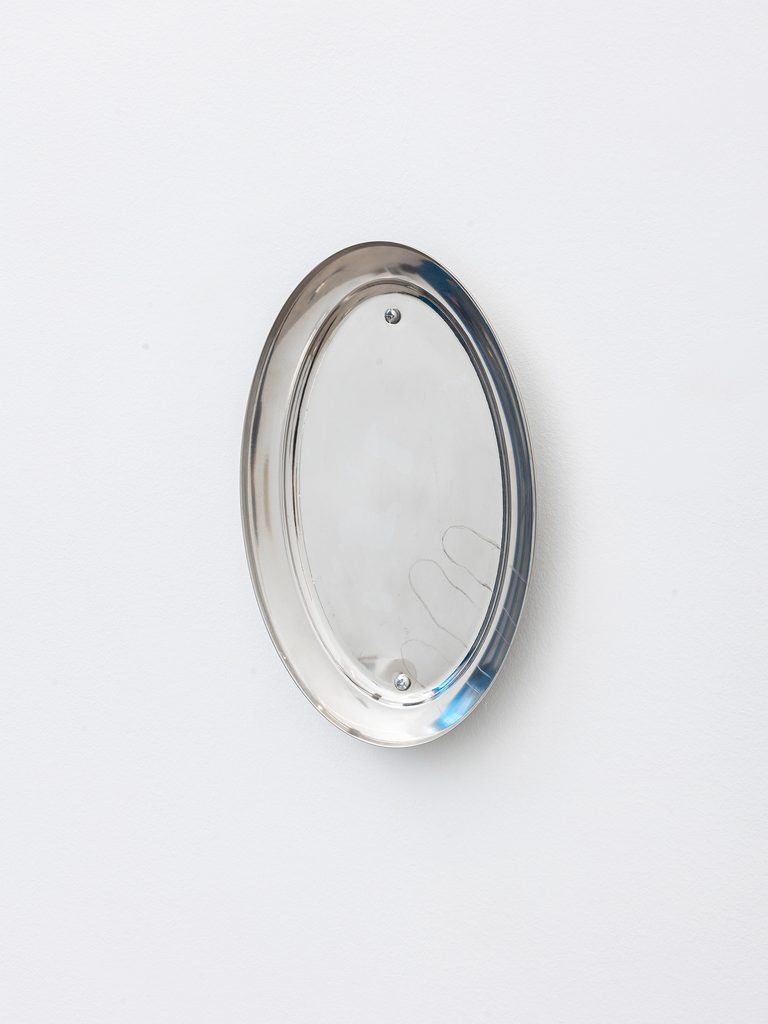
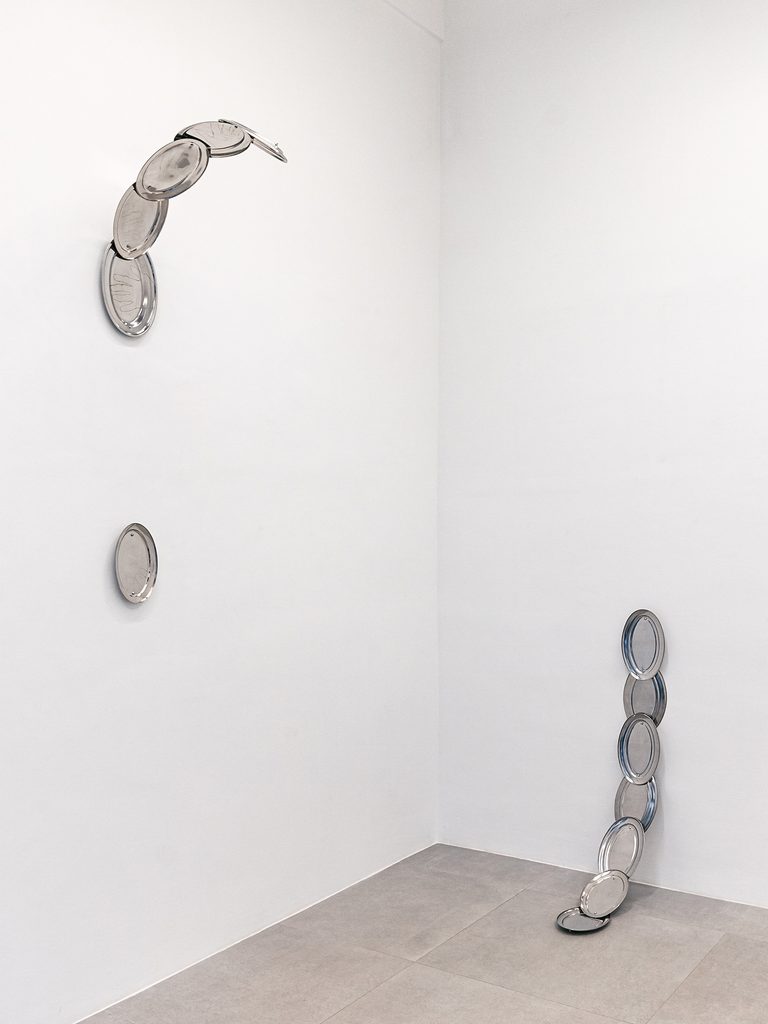
The installation Cave features oval metal trays that the artists engraved with the outlines of his father’s hands, transforming ordinary objects into an archive of labor, memory, respect and loyalty. Bekteši uses prehistoric handprints from Argentine caves, testamenst to early humanity’s need to leave a mark, and transfers them onto metal trays typical of pastry shops, restaurants, and bakeries. On their already worn and scratched surfaces he uses drypoint to etch the outlines of his father’s hands, leaving a trace not in pigment but as a scratch, and the prehistoric gesture of recording presence shapeshifts into a record of often invisible labor. The hands’ outlines bear witness to years of hard manual labor – deformed fingers, swollen joints, thickened bones. Time is inscribed not only on the utilitarian objects, but also on the hands that used them.
The drypoint drawings are at times nearly invisible, mirroring the invisibility of the labor they record. These metal trays seem to be fragments of an intimate archaeology of labor – individual traces from which the story of the body, labor, and family heritage can gradually be decoded.
The interplay between object, body, and trace is a persistent theme in Bekteši’s work. In 250 °C, he gilds traces of grease and dough on his father’s worn baking pans with gold leaf, while in EURO SMILE: A Monument to Gastarbeiters, his artist’s fee is converted into gold and set into his own tooth. Both object and body become surfaces on which labor, economic value, migration, and family history are sedimented. In Cave, this dynamic shifts once again: the trace is no longer solely what labor leaves on the objects that hand touches, but what also years of labor have etched on the hands themselves.
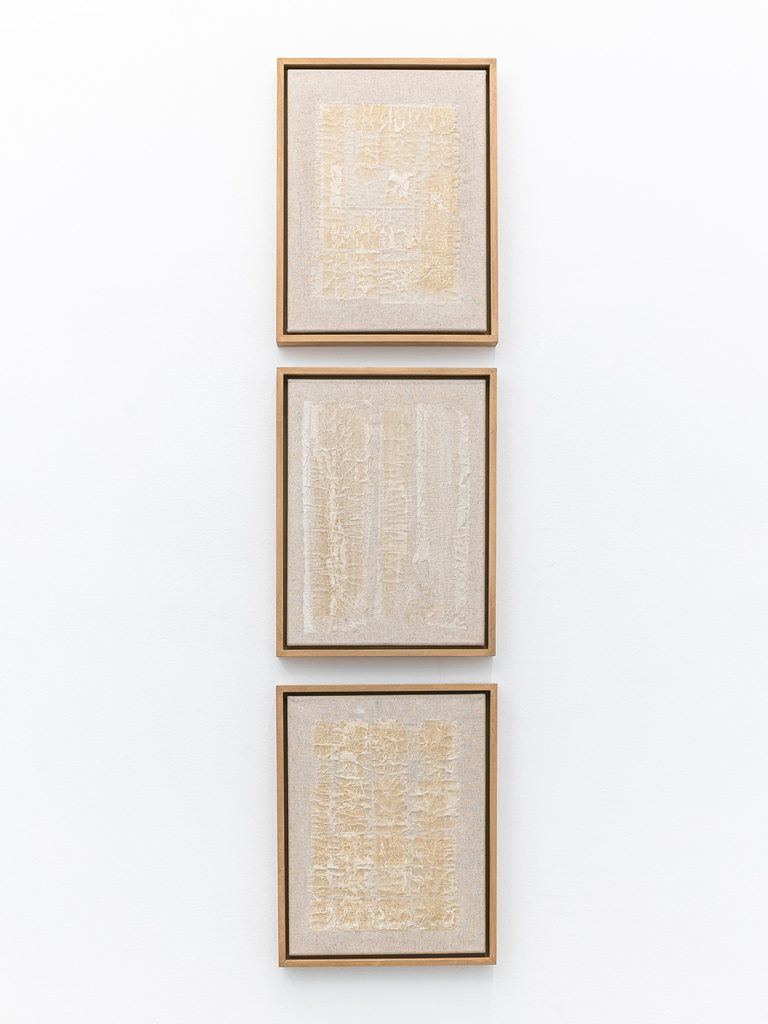
In contrast to the cold surface of metal, Bekteši’s assemblages from the series Studies: The One Before Me and the One Before Them are crafted from jufka – phyllo dough – a material deeply connected to food, daily life, and cultural tradition. Layered onto unprimed linen canvas, the dough forms a surface that continues to change even without the artist’s touch: as it dries and cracks, hidden strata are gradually revealed. What lies beneath comes to the surface. The series’ title guides the viewer to read this layering generationally – toward “the one before me and the one before them.” Bekteši links the many strata and individual elements required to create a stable form with the idea of community and the multitude of hands that build it.
The relationship between father and son, a central motif in Bekteši’s earlier works, here expands to encompass a broader legacy passed down through generations. Family heritage goes beyond what is remembered and narrated: it is embedded in materials, objects, everyday gestures, and bodies. Manual labor is seen not only as production but as a trace, repetition, and heritage, and a form of giving, love, and care—shaping both objects and bodies, as well as participating in the creation of home and community. Shelter, refuge, is the space of those who create it: of hands whose labor safeguards others, even as they themselves bear the marks of that creation.
Martina Munivarna
¹ Rene Karabash, She Who Remains, Sandorf, 2025.
Kemil Bekteši (b. 1997) is a Kosovar visual artist of Gorani origin whose work explores food and migration. His work is often underpinned by themes of identity, geopolitics and cultural memory through a personal history marked by borders and migration. His artistic practice spans a range of media, including food, installation and sculpture. His art often reflects the cultural and political overlaps between the countries of the former Yugoslavia, as he has been personally connected to the region throughout his life. Bekteši’s research into social issues often focuses on the complex relationships between nations, cultures and histories and how these are expressed in contemporary visual forms. His work examines both interpersonal and geopolitical dynamics, positioning him as a reflective voice in the ongoing discourse on regional identity.
He received his MA (2021) and BA (2020) from the Academy of Fine Arts in Sarajevo, where he was awarded the Golden Badge for Outstanding Academic Achievement. In 2018/19 he studied Contemporary Art at the Faculdade de Belas Artes do Porto (Portugal), and in 2023 he participated in the WHW Academy in Zagreb, Croatia.
Winner of several awards, including the Zvono (YVAA) Award for Young Visual Artists in Bosnia and Herzegovina in 2024, and was a finalist for the Mangelos (YVAA) Award in 2022 in Belgrade.
His work has been presented in numerous institutions including The Galerie für Zeitgenössische Kunst (2026), The National Gallery of Kosovo (2025), RU House, NYC (2025), Die neue Gesellschaft für bildende Kunst, Germany (2024), Historical Museum of Bosnia and Herzegovina (2022), The National Gallery of Bosnia and Herzegovina (2020). He lives and works in Sarajevo, Bosnia and Herzegovina.