


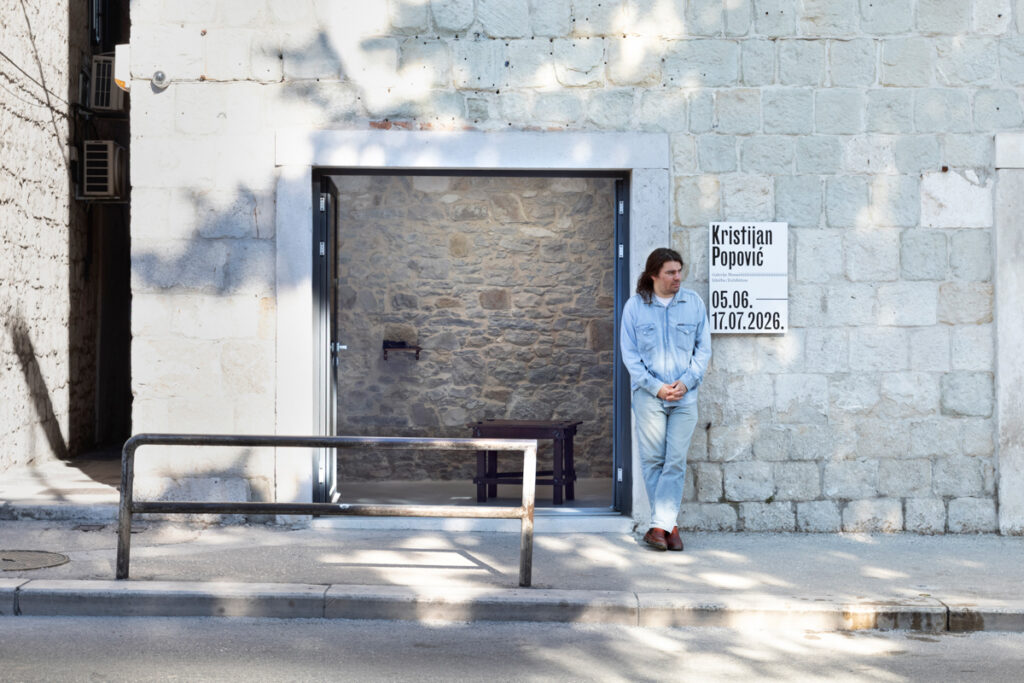
Kristijan Popović
How Many Dictators Does it Take to Build a Table?
5. 6. - 19. 7. 2026. Galerija Manuš, Split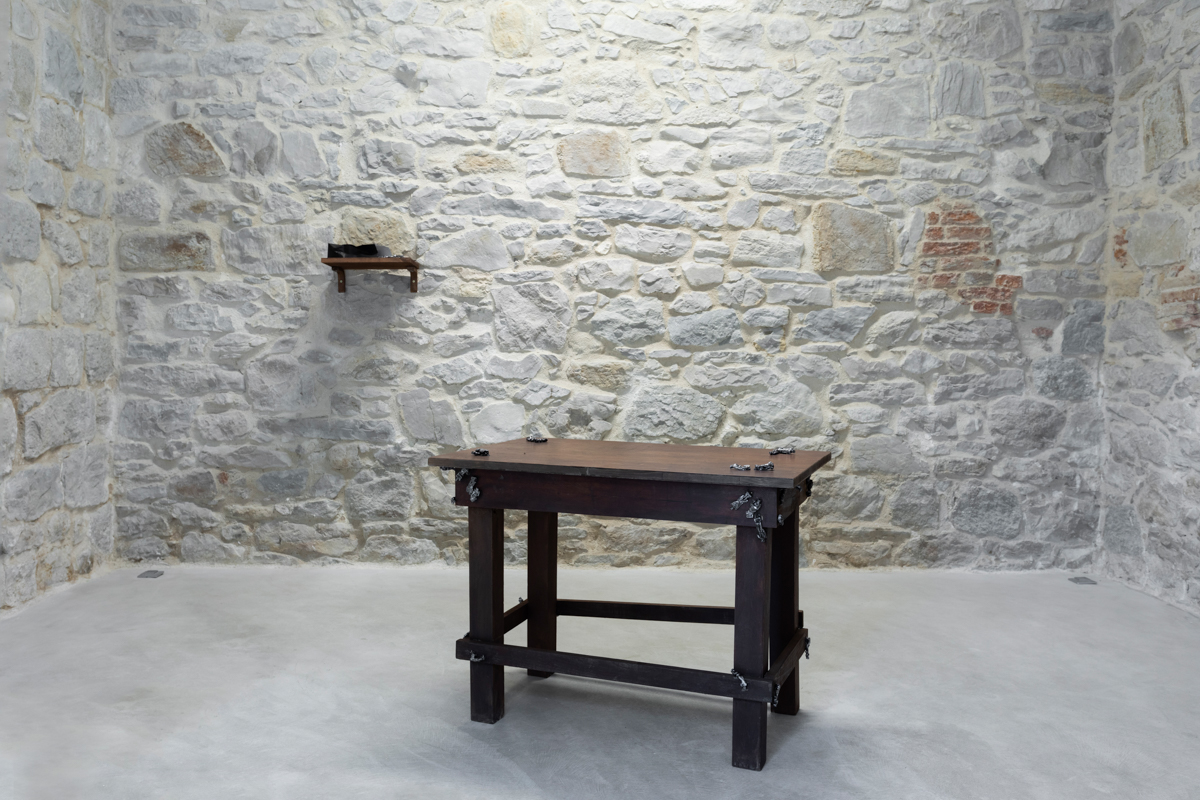
How Many Dictators Does It Take to Build a Table?
(…)
A table seems to belong to everyday life in an entirely peaceful way: it gathers bodies, directs gazes, determines seating positions, and organizes the distribution of voices. Around it, people eat, converse, and negotiate, while agreements, contracts, decrees, and decisions are signed upon its surface and continue to exert their effects beyond the space in which they were created. In this sense, the table is far more than a utilitarian object; it reveals itself as a social apparatus, a stage for authority, and a material extension of order.
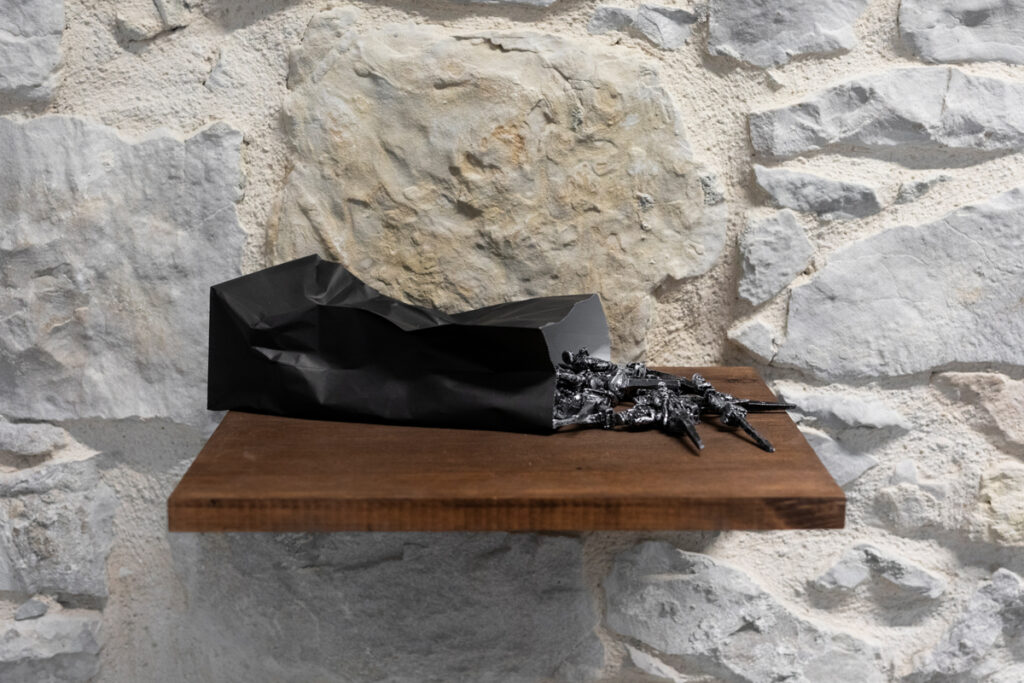
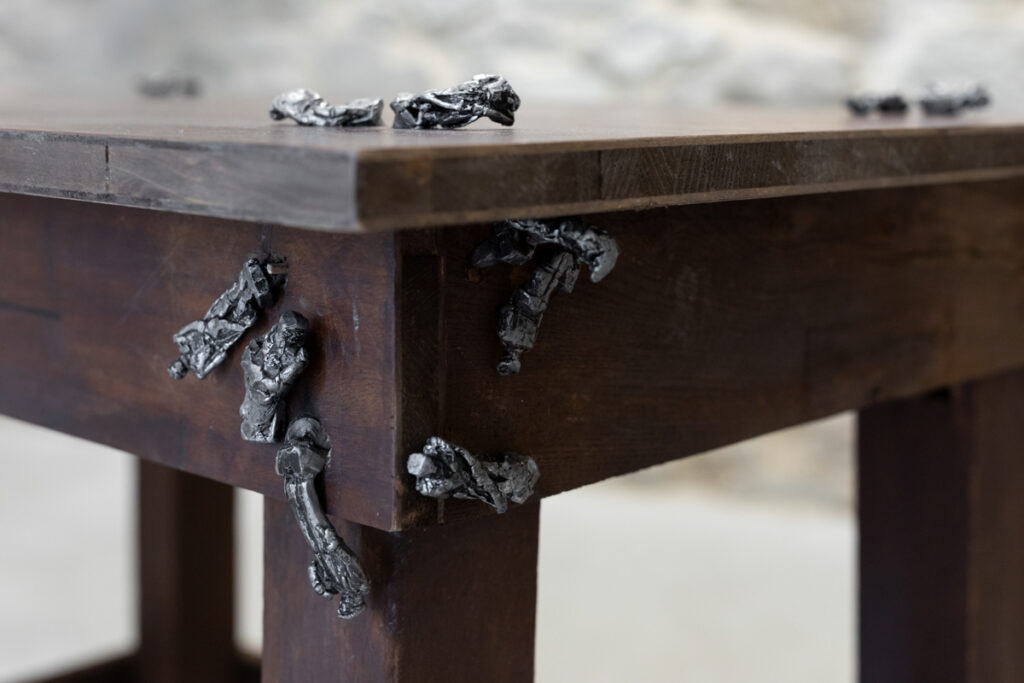
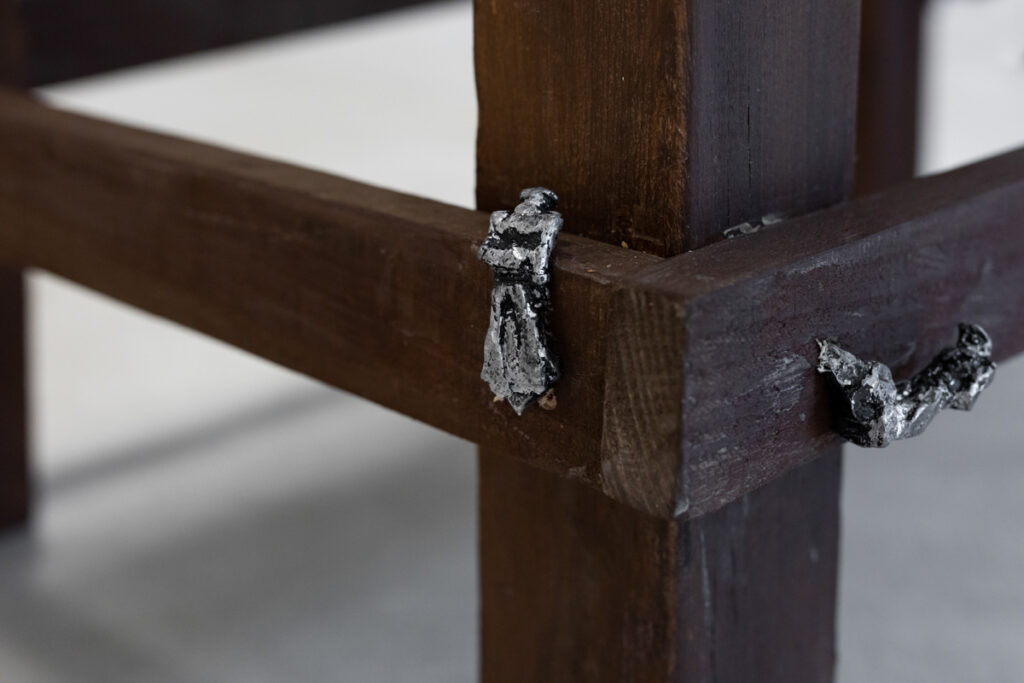
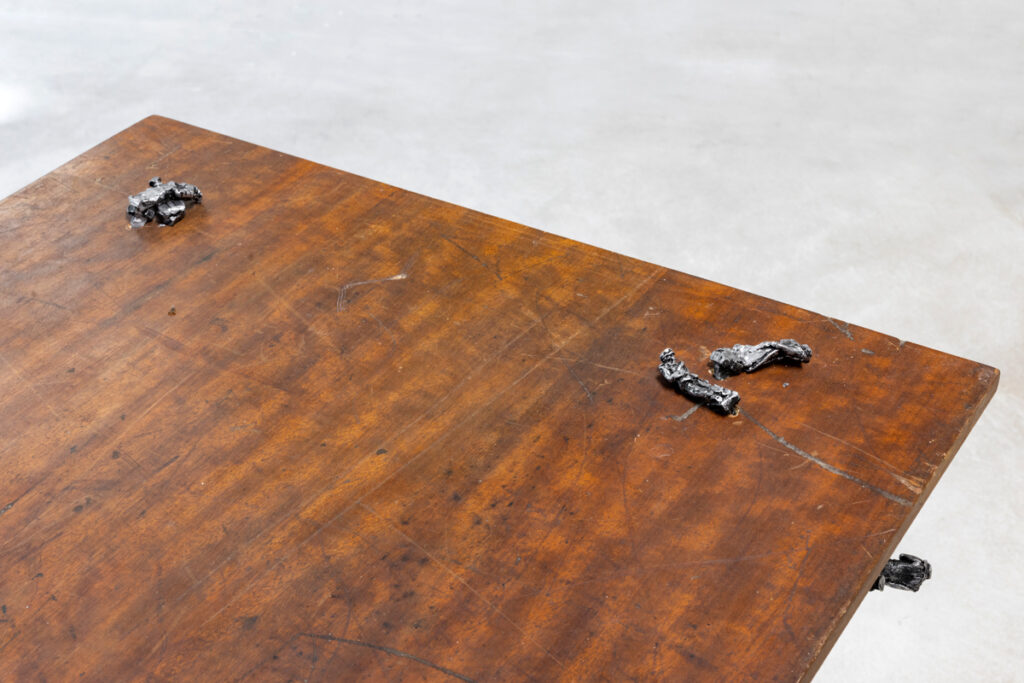
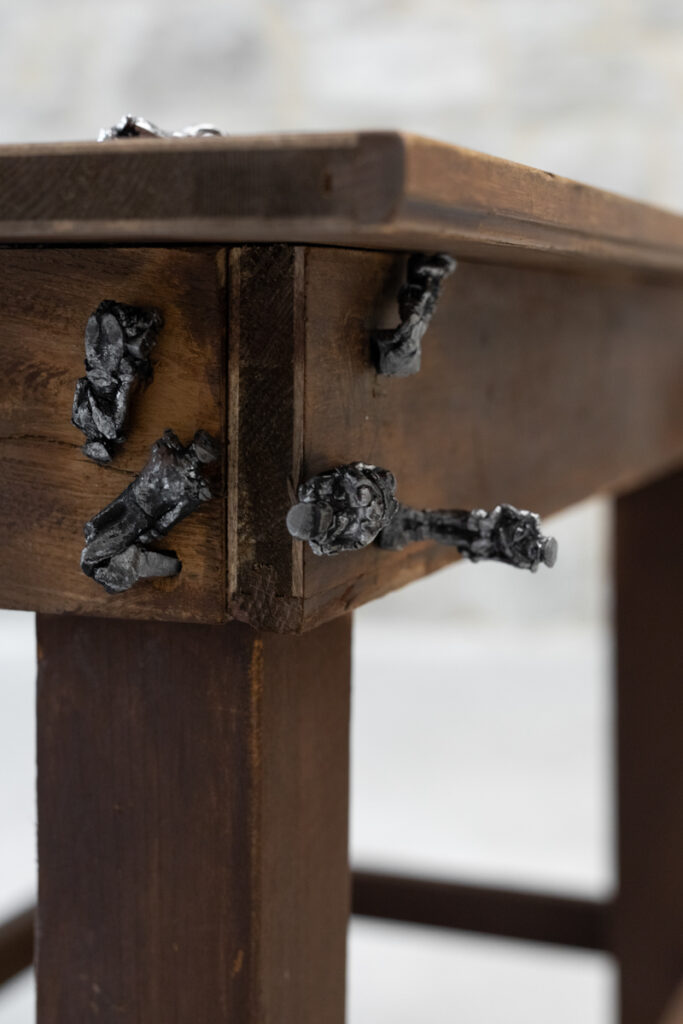
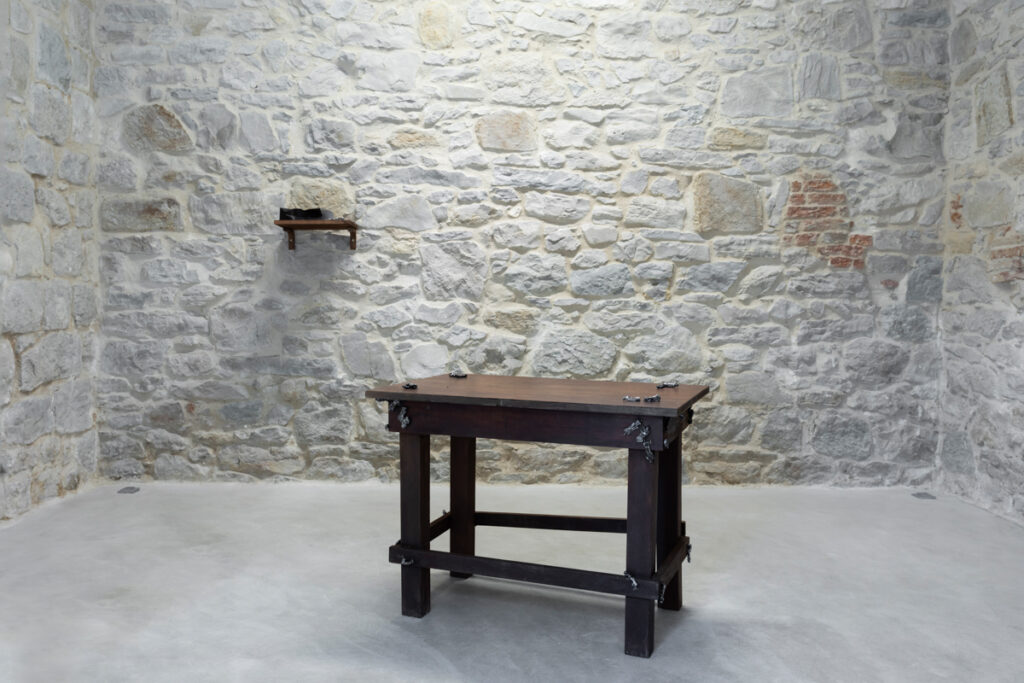
In How Many Dictators Does It Take to Build a Table?, Kristijan Popović constructs a wooden table, entrusting its structure to metal nails shaped like dictators. These nails perform a dual function: they hold the construction together while simultaneously revealing its symbolic logic. On a literal level, they connect the parts of the table and guarantee its apparent stability; on a metaphorical level, they point to violence, coercion, authority, subordination, and the mythology of the strong hand as the elements from which such stability is assembled. Rather than appearing as monumental figures on pedestals, dictators emerge here as technical details within the construction, embedded in the very structure of an object we use every day.
This is one of the work’s key characteristics. Popović considers dictatorship as a principle of construction, as a system of small, precisely positioned elements that reinforce order, connect its parts, and create the impression of permanence. The leader’s face, public speech, uniform, and monumental architecture give way to the joint, the nail, and the load-bearing point. In this work, permanence appears as an effect of pressure, while solidity emerges as a condition dependent on elements prone to loosening, bending, and breaking. The table’s structure appears stable, yet within its construction one can already discern the possibility of fracture. What presents itself as stable proves unstable, and what imposes itself as a supporting framework is revealed as a point of weakness.
The table thus becomes an image of a political and social order that builds its strength precisely upon unstable foundations. Dictatorships produce an impression of unquestionable certainty; their laws, decisions, signatures, and documents strive to appear final, immovable, and enduring. Popović’s table reminds us that every such structure depends upon joints, pressures, and points of tension, upon the hidden mechanics of subjugation that keep an order upright only as long as its nails hold. The moment they give way, the entire construction begins to collapse. The question posed in the title—How Many Dictators Does It Take to Build a Table?—therefore functions as more than an ironic joke. It becomes a question about the price of stability, the number of figures of power required to sustain the illusion of order, and the moment at which that order becomes a caricature of itself.
The patriarchal dimension of the table is, of course, equally important. In many social and familial imaginaries, the table is the place of the “head of the household,” the position from which authority is distributed, speeches are delivered, decisions are made, and judgments are pronounced. Popović’s work relocates this symbolism into a broader political framework. The dining or working table becomes a model for the organization of power, while its horizontal surface—upon which agreements, laws, and decrees may be signed—depends upon the vertical forces that support it. The surface on which official order is produced rests upon hidden or semi-hidden forms of violence.
In this sense, the work opens a space for reflection on the documents, decisions, and historical narratives that have been produced “at the table.” What does it mean to sign a document upon an object that is itself falling apart? How valid is a decision made upon a structure founded on coercion? Can a table that symbolizes agreement simultaneously reveal the impossibility of an equal conversation? Popović’s work avoids unambiguous answers and instead creates a situation in which the object itself begins to function as an argument, so that its material instability becomes a political statement.
It is particularly significant that the artist works with an object intimately connected to the body and to everyday life, far removed from monumental form. Dictatorship is thus recognized as something that can be inscribed into objects, gestures, seating arrangements, modes of decision-making, and forms of communication. The metal nails shaped like dictators serve as a reminder that authoritarian structures inhabit even the small architectures of obedience. They become embedded in habits, spaces, and relationships, often precisely where we no longer notice them.
(…)
(From a text by Dalibor Prančević)
Kristijan Popović (b. 1998) graduated from the Academy of Fine Arts in 2025, in the class of doc. art. Predrag Pavić. Since 2018, he has been actively working in the fields of theatre and film scenography. He has participated in numerous group exhibitions and has held four solo exhibitions. He is the recipient of the Rector’s Award (2021/2022 and 2022/2023), the Third Prize for Young Artists Ivan Kožarić at the Museum of Contemporary Art in Zagreb (2022), the Jury’s First Prize at the Starter Prize competition at the Royal Academy of Fine Arts in Antwerp (2023), and the Summa cum laude commendation from the Academy of Fine Arts in Zagreb for both his undergraduate and graduate studies in 2024 and 2025. He is also one of the finalists for the Radoslav Putar Award in 2026.